
Jewish people celebrate Hanukkah to remember the rededication of the Jerusalem Temple after the Maccabean struggle against Seleucid rule, and to give thanks for deliverance and the miracle of the oil preserved in rabbinic tradition. Its name means dedication. The festival lasts eight days, beginning on the twenty-fifth of Kislev in the Hebrew calendar.
Its meaning emerges through several kinds of sources: ancient accounts of the Temple’s restoration, a later Talmudic explanation of the lights, and the prayers and customs through which communities remember the festival today. These sources illuminate different aspects of Hanukkah and should be read with their distinctions intact.
The struggle behind the rededication
The introduction to 1 Maccabees situates its account in the second century BCE. The book describes an attempt to suppress Jewish religious practice and the resistance that followed. The setting is the Seleucid kingdom associated with Antiochus IV, rather than a conflict with the Roman Empire.
1 Maccabees 1:41–49 portrays royal orders against practices including Sabbath observance, sacrifice, and circumcision. It also describes Israelites adopting the king’s religious customs. The narrative therefore involves conflict within Jewish society as well as opposition to royal coercion.
For later remembrance, the ability to restore worship became central. The story concerns a particular people, sanctuary, and set of religious commitments. Calling it a struggle over religious freedom can express an important modern interpretation, provided it does not erase that historical specificity.
What the ancient accounts say about the Temple
In 1 Maccabees 4:36–59, Judas Maccabeus and his companions set about purifying the damaged sanctuary. The account describes repairs, a new altar, new sacred vessels, the lighting of lamps, and the restoration of worship.
The dedication is celebrated for eight days. The assembly then establishes an annual commemoration beginning on the twenty-fifth of Kislev. In this account, the festival marks the recovery and rededication of the sanctuary.
2 Maccabees 10:1–8 also describes purification and an eight-day celebration. It connects the observance with the Feast of Booths, or Sukkot, recalling how the people had previously spent that festival in mountains and caves. Its explanation adds another dimension to the eight-day remembrance.
The Books of Maccabees are useful ancient sources for this history even though they are not part of the Jewish Tanakh. Their preservation in Christian biblical collections does not make the events they describe a Christian festival.
The miracle of the oil in rabbinic tradition
The well-known oil narrative appears in the Babylonian Talmud, Shabbat 21b. In the passage published by the Posen Library, the Hasmoneans find one vessel of oil bearing the high priest’s seal. It contains enough for one day, but a miracle allows it to provide light for eight days.
The passage then describes the establishment of days of praise and thanksgiving. It connects the festival with Hallel and grateful remembrance, giving the lighting a specifically religious meaning.
Posen’s introduction notes that this miracle narrative is absent from the earlier accounts in 1 and 2 Maccabees. That difference matters: the books describe the restoration and its celebration, while the Talmudic passage supplies the familiar oil explanation. Combining them into a single undifferentiated eyewitness account would obscure how the tradition is transmitted.
The miracle is a claim of Jewish religious tradition. Its importance to believers can be explained without treating it as a modern experimental finding or promising that every difficult situation will end through a similar intervention.
Why lighting is at the heart of the festival
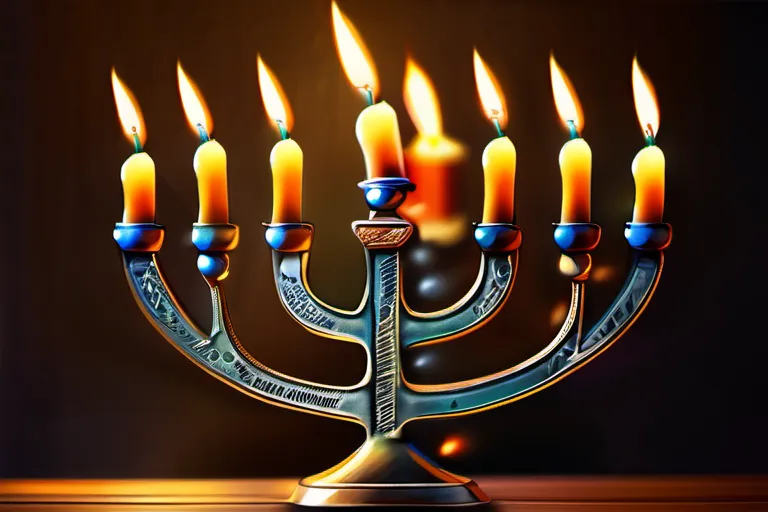
The Hanukkah lamp, often called a hanukkiyah, has positions for eight festival lights and an additional helper light, the shamash. Reform Judaism’s overview explains these functions and describes the shamash as distinguished from the other lights.
This arrangement differs from the biblical sanctuary lampstand described with seven lamps in Exodus 25:31–37. The household Hanukkah lamp marks the festival’s eight nights; it is not simply a replica of that seven-lamp design.
In the familiar practice, one festival light is kindled on the first evening and an additional light on each subsequent evening. The helper is separate from that count. The growing display makes the passage through the festival visible while the blessings identify it as an act of remembrance and thanksgiving.
Lamps need not all have the same artistic form. The Jewish Museum’s catalogue identifies an Italian Hanukkah lamp as probably eighteenth-century, with architectural arches and columns. This documented object is an example of ritual expressed through a particular place and design, rather than evidence of one universal style.
Prayer, praise, and the home
Hanukkah is observed through more than the display of a lamp. The rabbinic account’s emphasis on praise and thanksgiving continues in religious practice. Reform Judaism’s customs guide describes blessings at lighting and the addition of Al HaNisim, a passage recalling miracles, in prayer and grace after meals.
The home is an important setting for passing on the story. Lighting, reciting blessings, singing, and speaking about the festival give people ways to participate together. The details vary among households and communities, including whether one lamp or several are used.
The recurring observance supplies the festival’s rhythm. It does not require a universal sequence in which each numbered evening has a different prescribed meal or family theme. A household may develop its own activities while retaining the central acts of lighting and remembrance.
Food, games, and gifts
Foods cooked in oil connect a meal with the oil narrative. Reform Judaism’s guide names latkes, sufganiyot, fried dough puffs, North African sfenj, and fried leek patties. The variety matters: Hanukkah food is not limited to one dish shared identically by every Jewish community.
The dreidel is a spinning top used in a holiday game. Gelt—money, including the familiar chocolate version—may be associated with the game or given as a gift. Singing, including the customary song Maoz Tzur, is another way communities celebrate.
Such customs provide occasions for play, hospitality, and learning. They need not be assigned an invented origin in every detail to have value. Nor does a family’s choice about gifts or food determine whether its remembrance is meaningful.
How important is Hanukkah in the Jewish calendar?
Public visibility and religious status are different questions. Hanukkah is a rabbinic festival, and its weekday observance does not carry the same general work prohibition as biblically prescribed days of rest. Chabad author Tzvi Freeman makes this distinction in his discussion of calling Hanukkah a “minor” holiday.
That classification does not mean the festival is insignificant. Its importance can lie in prayer, the memory of restored worship, and the ability to make Jewish identity visible at home or in community. Jewish festivals express different kinds of remembrance and religious responsibility; they do not all have the same pattern of observance.
The twenty-fifth of Kislev also does not correspond to one fixed Gregorian date each year. Using the Hebrew date and the festival’s own story keeps its identity clear, rather than defining it through the timing of another religion’s winter celebration.
What the remembrance asks people to consider
The sources bring several themes into focus. Rededication concerns restoring worship after desecration. The oil narrative directs attention to divine help and thanksgiving. Household lighting brings these memories into a repeated practice, while food, song, and storytelling make room for different generations.
Modern communities may also draw lessons about religious freedom, continuity, and responsibility for Jewish life. Those interpretations are most useful when they remain connected to the sources and the people observing the festival. Hope is a meaning people may find in the lights, rather than a guarantee that faith removes every danger.
Conclusion
Jewish people celebrate Hanukkah through the memory of the Temple’s rededication, the rabbinic story of eight days of light, and continuing practices of praise and thanksgiving. The ancient books and Talmudic passage preserve distinct explanations that help readers understand the festival’s depth. Lighting, prayer, food, song, and family customs give that remembrance a lived form. Reading the sources closely allows both the historical setting and the religious significance to remain visible, while recognizing that Jewish households and communities do not all celebrate identically.
Published by Ralf. About our editorial process.




2 thoughts on “Why Jewish People Celebrate Hanukkah: Dedication, Light, and Remembrance”