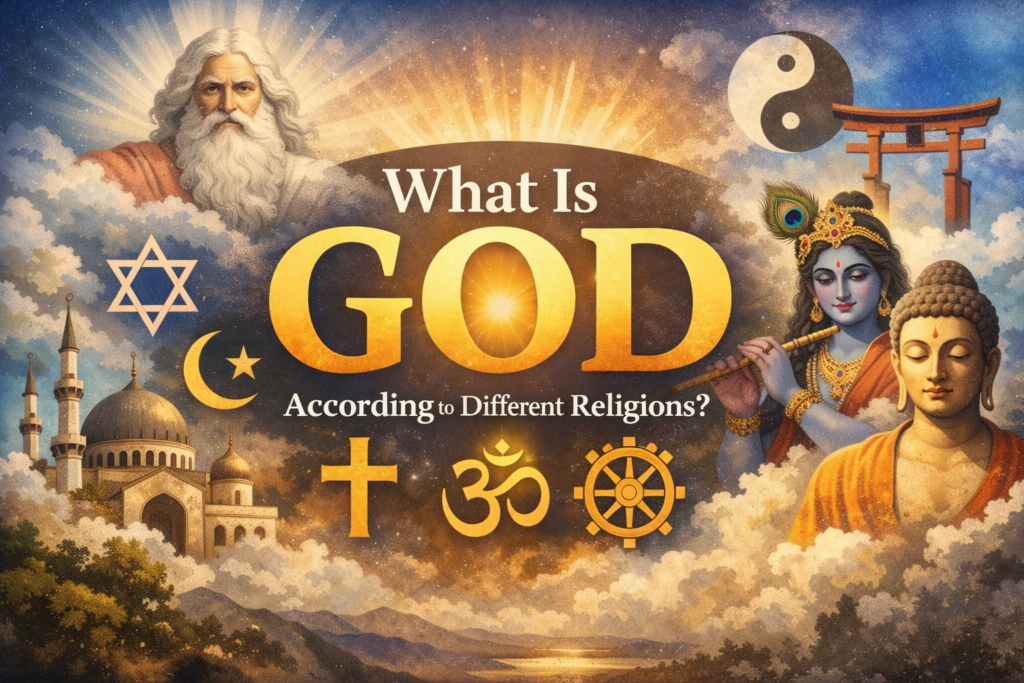
The question “What is God?” has fascinated humanity for thousands of years. Across cultures and civilizations, religions have offered diverse answers shaped by history, philosophy, and spiritual experience. While the concept of God varies widely, exploring these perspectives reveals shared themes about meaning, morality, and the nature of existence.
This article explores how major world religions understand God, highlighting both similarities and differences in a clear and accessible way.
The Concept of God in Monotheistic Religions
Monotheistic religions believe in a single, supreme divine being who is the creator and sustainer of the universe.
God in Judaism
In Judaism, God is understood as one, indivisible, and eternal. God is the creator of the universe and the source of moral law. Rather than being physically represented, God is known through actions, commandments, and a covenantal relationship with the Jewish people.
God in Judaism is deeply personal yet transcendent, beyond human comprehension. The emphasis is less on defining God’s essence and more on living according to divine laws and ethical responsibility.
God in Christianity
Christianity also teaches belief in one God, but understands God as a Trinity: Father, Son, and Holy Spirit. These are not three gods, but three persons sharing one divine essence.
God is viewed as loving, personal, and actively involved in human history. The Christian understanding emphasizes God’s desire for relationship with humanity, forgiveness, and redemption. God is both transcendent and immanent, meaning present in the world and in believers’ lives.
God in Islam
Islam teaches strict monotheism, known as tawhid, the absolute oneness of God. God is unique, eternal, and incomparable. Nothing in creation resembles God, and associating partners with God is considered the gravest sin.
God is described through divine names and attributes that emphasize mercy, justice, wisdom, and power. In Islam, God is both compassionate and just, guiding humanity through revelation and moral law.
God in Eastern Religions
Eastern religions often present concepts of the divine that differ from the personal creator God found in monotheistic traditions.
God in Hinduism
Hinduism encompasses a wide range of beliefs about God. Some traditions worship a single supreme reality, while others focus on multiple gods representing different aspects of the divine.
At its philosophical core, Hinduism teaches the concept of Brahman, the ultimate, formless reality underlying all existence. Personal gods are seen as manifestations of this absolute reality, allowing individuals to connect with the divine in diverse ways.
God in Buddhism
Buddhism does not center on belief in a creator God. Instead, it focuses on understanding suffering, impermanence, and the path to liberation.
While gods may exist in Buddhist cosmology, they are not creators or ultimate authorities. Spiritual progress depends on insight, ethical conduct, and mental discipline rather than divine intervention.
God in Taoism
Taoism does not define God in a personal sense. Instead, it speaks of the Tao, the fundamental principle that governs the universe.
The Tao is not a deity but the natural order of reality itself. It cannot be fully described or named, and harmony comes from living in accordance with its flow rather than worshipping a divine being.
God in Other Religious and Philosophical Traditions
Beyond the major world religions, many belief systems offer unique perspectives on the divine.
God in Sikhism
Sikhism teaches belief in one formless, eternal God who transcends gender and physical form. God is both beyond creation and present within it.
Devotion, ethical living, and remembrance of God are central practices. Sikhism emphasizes equality, service, and direct connection with the divine without intermediaries.
God in Indigenous Religions
Many indigenous religions understand the divine as deeply connected to nature. God or the sacred may be expressed through spirits, ancestors, or natural forces.
Rather than a distant creator, the divine is often experienced as present within the land, community, and daily life. These traditions emphasize balance, respect, and harmony with the natural world.
God in Deism and Philosophical Theism
Deism holds that God created the universe but does not intervene in its ongoing operation. God is understood through reason and observation of nature rather than revelation.
Philosophical theism explores God as the ultimate cause or necessary being, often emphasizing abstract qualities such as perfection, infinity, and timelessness.
Common Themes Across Religious Views of God
Despite differences, many religions share key ideas about God or the divine. These include the belief that ultimate reality gives meaning to existence, that moral values are rooted in something greater than humanity, and that spiritual understanding transforms how people live.
Whether described as personal or impersonal, transcendent or immanent, God often represents truth, purpose, and the source of ethical guidance.
Why Definitions of God Differ Between Religions
Differences in how religions define God arise from historical context, cultural worldview, philosophical inquiry, and spiritual experience. Some traditions emphasize relationship and revelation, while others prioritize insight and harmony.
Language also plays a role. Many religions teach that God ultimately transcends human concepts, meaning any definition is symbolic rather than complete.
Can Different Religious Views of God Coexist?
Many scholars and believers argue that different concepts of God reflect diverse approaches to understanding the same ultimate reality. Others maintain that these differences represent fundamentally distinct beliefs.
Interfaith dialogue increasingly focuses on shared values such as compassion, justice, and humility rather than doctrinal agreement, allowing coexistence despite theological differences.
Conclusion
The concept of God varies widely across religions, ranging from a personal creator to an impersonal ultimate reality, and even to traditions that do not focus on God at all. Exploring these perspectives deepens understanding of humanity’s spiritual diversity and complexity.
Rather than offering a single answer, religions provide multiple lenses through which people seek meaning, truth, and connection in the universe.
Frequently Asked Questions (FAQ)
Is God the same in all religions?
No. While some religions share similar attributes, others have fundamentally different understandings of God or do not focus on a creator deity at all.
Do all religions believe in God?
No. Some traditions, such as Buddhism, focus on spiritual practice and enlightenment without belief in a creator God.
Why do religions describe God differently?
Differences arise from cultural context, philosophical foundations, historical development, and varying spiritual experiences.
Can someone believe in more than one concept of God?
Some individuals adopt philosophical or syncretic views that integrate multiple perspectives, though this varies by tradition.
Is it possible to understand God fully?
Most religions teach that ultimate reality exceeds human comprehension, and any understanding of God is partial and symbolic.