

The Jewish calendar contains many observances because it brings together several rhythms of life: weekly rest, seasonal festivals, historical remembrance, repentance, mourning, and the continuing study of Torah. Some occasions come from the Torah’s festival calendar; others recall events or developed through later Jewish tradition.
There is no single meaningful total without deciding what counts as a holiday. A list may include Shabbat, major festivals, intermediate festival days, fasts, and modern commemorations. These occasions have different purposes and forms of observance. A long calendar list does not mean that every entry is a celebration or an identical day off.
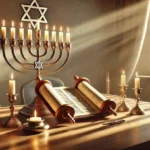
A calendar of different kinds of time
One way to understand the number of observances is to look at what each kind contributes. The following examples illustrate several functions rather than provide an exhaustive or mutually exclusive classification:
| Rhythm or purpose | Examples |
|---|---|
| Weekly sacred rest | Shabbat |
| Seasonal festivals with historical and religious meanings | Pesach, Shavuot, Sukkot |
| New year and atonement | Rosh HaShanah, Yom Kippur |
| Remembering deliverance and dedication | Purim, Hanukkah |
| Mourning and commemoration | Tishah B’Av, Yom HaShoah |
A fast day and a festival meal express different responses to life. Bringing both into one calendar makes room for gratitude, responsibility, grief, and renewal. Counting their names alone does not reveal those differences.
The Torah already provides a framework
Leviticus 23 sets out appointed times that include weekly Sabbath rest and annual observances. Its sequence includes Passover and Unleavened Bread, a counted period leading to a grain offering, a first-day-of-the-seventh-month observance, the Day of Atonement, and the Feast of Booths.
The text already distinguishes kinds of activity: rest, offerings, remembrance, and solemn self-humbling. The biblical calendar is not simply a collection of interchangeable parties. Contemporary names and interpretations also need to be related carefully to the language of the text.
For example, the festival now called Rosh HaShanah appears in Leviticus 23:23–25 through its date, rest, and trumpet blasts. Its place within Jewish life includes both that scriptural background and later interpretation.
Agriculture and historical memory overlap
The seasonal dimension reflects a biblical farming landscape. Exodus 34:22 associates the Feast of Weeks with the first fruits of the wheat harvest and names a feast of ingathering. Harvest and gratitude are therefore part of the calendar’s scriptural foundations.
Shavuot offers a clear example of meanings held together. Reform Judaism’s overview explains its agricultural background and its celebration of the giving of Torah at Sinai. The same festival can address the provision of food and the transmission of religious teaching.
Sukkot likewise connects gathered produce with dwelling in booths and remembering the Israelites’ journey. These themes do not compete for a single “real” meaning. They allow the festival to join material dependence, historical memory, and worship.
The agricultural associations also should not be turned into a claim that every Jewish community experiences the same weather or harvest at the same moment. Jewish people live across different regions while observing a calendar shaped by the biblical world.
Repeated rituals teach across generations
Historical memory becomes part of ordinary life through recurring practices. Exodus 13:8 instructs a parent to explain the observance to a child through the story of leaving Egypt. Teaching the next generation belongs within the scriptural understanding of remembrance.
This helps explain why one annual occasion cannot do the work of every other. A meal associated with liberation, a time devoted to atonement, and a festival of Torah learning raise different questions. Their repetition supplies occasions to tell, ask, reflect, and act.
The role of ritual is therefore more specific than producing a general feeling of togetherness. A practice can preserve a particular story, direct attention to an obligation, or give a community words for an experience. Participation and interpretation vary, but the calendar supplies a shared set of reference points.
Later events add further occasions for remembrance
Jewish tradition continued to develop beyond the Torah’s annual festival list. Esther 9:20–22 connects the observance of Purim with deliverance, feasting, gifts of food, and gifts to the poor. Its memory is expressed through both joy and responsibility toward others.
Hanukkah remembers the Temple’s rededication and the oil narrative preserved in rabbinic tradition. Its lights and thanksgiving have a different setting from Passover’s Exodus remembrance. The existence of several festivals reflects several stories and religious purposes.
Modern Jewish remembrance adds further layers. Yom HaShoah commemorates victims of the Holocaust. It is a memorial observance, so describing it as another festive celebration would misrepresent its purpose.
Mourning also has a place
Tishah B’Av illustrates why the word “holiday” can be misleading if it always suggests happiness. Rabbi Mark Washofsky’s explanation describes its traditional fasting and mourning over the destruction of the First and Second Temples.
He also discusses disagreement within Reform Judaism over how the day should be observed and interpreted. This is a concrete reminder that one calendar name does not imply one identical practice among all Jews.
Including mourning within sacred time allows loss to be remembered collectively. It also means a calendar can contain both a day of rejoicing and a day of grief without treating them as the same kind of event.
Why some festivals fill several calendar entries
A multi-day festival is not necessarily a collection of unrelated holidays. The biblical observances include extended periods with opening and closing occasions. A calendar may show these separately, making the annual list appear longer.
Shemini Atzeret and Simchat Torah provide a further example. In Chabad’s description of traditional practice, the observance extends across two days in the diaspora and one in Israel. The relationship between names, days, and practices therefore needs attention.
Simchat Torah celebrates the completion and renewal of the Torah reading cycle. Its connection with an existing festival illustrates how a calendar can bring different meanings together rather than simply add an unrelated date.
A person comparing calendars should ask whether a list counts a whole festival once, every day within it, or named observances connected with it. Each approach may serve a useful purpose, but the totals will differ.
Why one-day and two-day practices differ
Chabad’s account of the second festival day explains the traditional connection with uncertainty over news of a newly declared month reaching distant communities. It also explains why the rabbinic practice continues after the establishment of a calculated calendar.
This is not a claim that modern communities cannot determine dates. It describes the continuation of an inherited religious practice for certain festivals.
Practice also differs by movement and community. Reform Judaism’s Rosh HaShanah FAQ says that most North American Reform congregations observe one day, while some observe two. Location alone therefore does not determine every congregation’s calendar.
The Hebrew calendar shapes dates and seasons
The U.S. Naval Observatory’s explanation describes the Hebrew calendar as lunisolar. Its months follow a lunar pattern, while leap years add a month within a nineteen-year cycle. This keeps the calendar connected to the solar year rather than letting it drift through all seasons.
As a result, a Hebrew festival date does not correspond to one fixed Gregorian date every year. The extra month serves to align the calendar; it is not itself an additional annual festival.
For practical purposes, a community’s current calendar explains its dates and observance. A list of religious occasions also should not be mistaken for a universal schedule of work restrictions: the days have different statuses, and communities apply their traditions differently.
Conclusion
Jewish people have many observances because the calendar gives recurring form to different parts of religious and communal life: rest, harvest, revelation, liberation, atonement, mourning, and remembrance. Its layers developed through scripture, interpretation, and later history. Multi-day festivals and differences among communities affect how many entries appear on a list. The useful question is therefore what each occasion remembers and asks people to do. Understanding those purposes reveals a structured calendar of distinct meanings, rather than an undifferentiated series of celebrations.
Published by Ralf. About our editorial process.



