
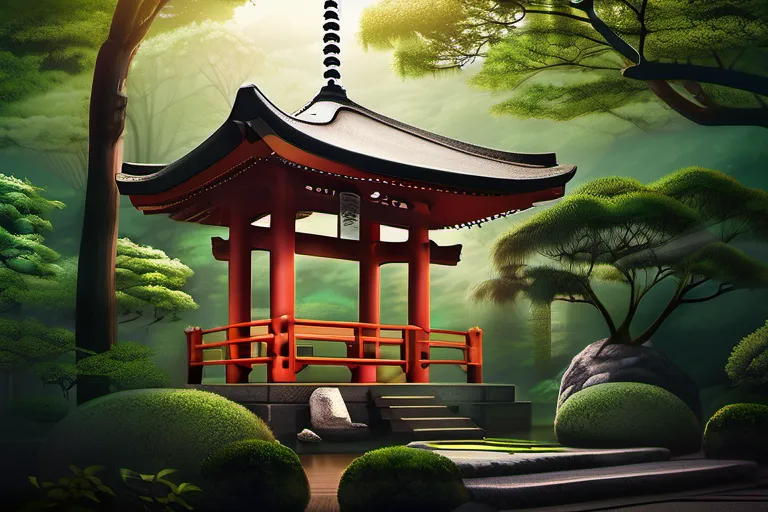
 Shinto is a Japanese religious tradition centered on honoring kami. Some kami are figures in old narratives, some are people honored after death, and others are associated with places such as mountains and rivers. A Shinto shrine, or jinja, is a sacred place where one or more kami are enshrined and where people can make offerings, give thanks or join in a rite. Jinja Honcho, Jinja: Heart of Japan
Kami in an early narrative
In the Kojiki, Amaterasu withdraws into a rock dwelling and darkness falls. Other kami gather, prepare a mirror and draw her attention with a performance that makes them laugh. When she emerges, light returns. The story gives Amaterasu and the other kami distinct roles. It is one early account of their relationships, and its mirror has a parallel in the way Amaterasu is honored at Ise today. Kojiki, the door of the heavenly rock dwelling · Ise Jingu, rituals and ceremonies
What happens during a shrine visit
Jinja Honcho, the Association of Shinto Shrines, describes the torii gate as marking the entrance to a shrine’s sacred precinct. A basin along the approach provides water for a visitor to rinse the hands and mouth before paying respects. At the prayer hall or sanctuary, the association describes a common sequence of two bows, two claps and a final bow, with time for a quiet prayer. This is an example of the steps through which a visitor can take part in shrine practice. Jinja Honcho, entering a shrine
Offerings and rebuilding at Ise Jingu
At Ise Jingu, the inner sanctuary honors Amaterasu. The shrine describes an annual rite in which priests offer the first rice of the harvest in gratitude. Its Shikinen Sengu follows a twenty-year cycle. A new sanctuary is built on an adjoining site and sacred furnishings and garments are made anew. The priests then transfer the sacred mirror, which the shrine describes as a symbol of Amaterasu, to the newly prepared sanctuary. The rite preserves the continuity of worship through the work of building and renewal. Ise Jingu, rituals and ceremonies
How a festival carries worship through a city
Yasaka Shrine in Kyoto traces its Gion Festival to prayers during an epidemic in 869. In the festival the shrine describes today, decorated floats pass through city streets and separate processions carry mikoshi, or portable shrines. The portable shrines leave Yasaka for a temporary resting place downtown and return a week later. The floats prepare the streets for that movement. Together, the two processions give a concrete example of how a matsuri, or festival, can bring shrine rites into a wider community. Yasaka Shrine, Gion Festival
Conclusion
Shinto takes shape through relationships with kami in particular places. A visitor may rinse their hands, bow and pray. At Ise, priests offer rice and oversee the renewal of a sanctuary. In Kyoto, a procession carries the kami through the city. These practices explain how Shinto expresses reverence, gratitude and a community’s memory across the course of a year.
Published by Ralf. About our editorial process.



