
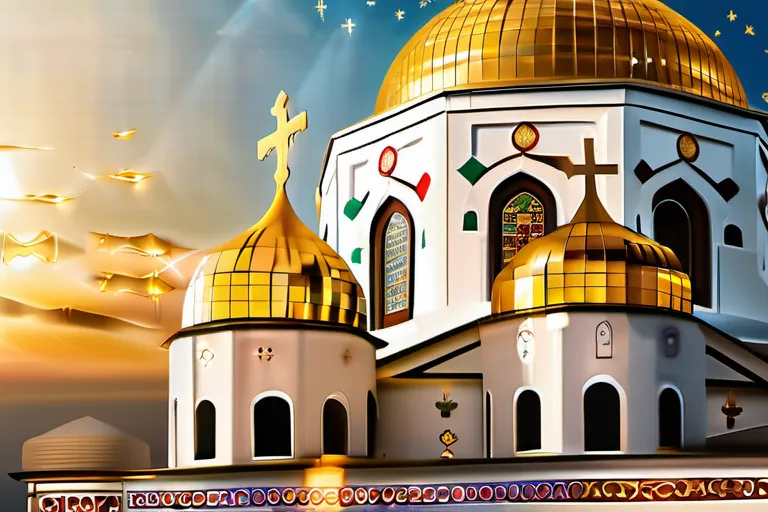
Eastern Orthodox Christianity is a family of churches sharing a Christian faith expressed through the early ecumenical councils, sacramental worship and Holy Tradition. Greek, Russian and other Orthodox identities belong within a wider religious life; Eastern Orthodoxy is not simply one nationality or one worldwide institution governed by a single administrative head.
What do Eastern Orthodox Christians believe?
The Orthodox Church in America’s explanation of the Trinity identifies Father, Son and Holy Spirit as three divine persons. This is a Christian confession of God, not a teaching that three unrelated gods are worshipped.
The World Council of Churches’ overview identifies the seven ecumenical councils as central to the churches’ shared faith. Our account of Arius and the Council of Nicaea explains one foundational dispute about the Father and Son.
What is Holy Tradition?
In the OCA’s account of Tradition, the apostolic writings and the Church’s continuing life belong together. Scripture is central within that transmission rather than an unrelated source set against every form of tradition.
This helps explain why liturgy, councils and inherited patterns of belief matter. It does not make every local custom equally authoritative or mean that all Orthodox communities have identical languages, music or calendars.
Why is the Eucharist central?
The OCA’s explanation of the Holy Eucharist places it at the center of church life. Its account includes gathering, prayer, scripture, remembrance of Christ and communion, and understands Christ’s presence as real rather than merely an exercise in thinking about an absent teacher.
These are theological claims about worship. Describing them accurately does not require presenting them as conclusions independently demonstrated by an outside observer.
Why are icons used?
A Greek Orthodox Archdiocese explanation of icons distinguishes veneration of an image from treating its material as a god. It explains the honor as directed toward the person represented.
Thus a description of Orthodox practice should not simply call the kissing or honoring of an icon “worshipping a painting.” It should explain the community’s distinction between the image, the person depicted and worship of God.
How are the churches organized?
The World Council of Churches describes several self-governing, or autocephalous, churches and identifies the Ecumenical Patriarch as first among equals. This differs from imagining one central office administering every Orthodox parish worldwide.
Local jurisdiction and particular questions of recognition can require more detail than a general introduction can provide. A church’s national name should not be used to assume that every member shares a political position.
Is Eastern Orthodoxy the same as Oriental Orthodoxy?
No. The WCC identifies Oriental Orthodox churches as a distinct family, including Coptic, Armenian and other churches. It relates their historical separation from the Eastern Orthodox family to the Council of Chalcedon in 451 and describes later theological dialogue.
The similar names should not erase that distinction. Likewise, a visitor should use the particular parish’s own information to understand its language, services and participation expectations.
What does theosis mean?
Orthodox accounts often describe the goal of Christian life through theosis, or participation in divine life. A Greek Orthodox introduction to spirituality relates this to humanity’s restoration to communion with God through Christ and the Holy Spirit.
The same explanation distinguishes participation in God’s energies from becoming identical with God’s essence. In this theology, salvation is not the individual replacing God or becoming another independent deity. It concerns transformation by grace and fellowship with God.
This helps connect doctrine with worship. Beliefs about the Trinity and Christ are understood as bearing on the person’s life and destiny, rather than as abstract propositions separated from prayer and sacramental participation.
How are baptism, chrismation and communion related?
The OCA’s description of baptism connects the sacrament with Christ’s death and resurrection. Its account includes profession of the creed and immersion three times in the name of the Father, Son and Holy Spirit. The religious meaning is entrance into a new life in Christ.
Chrismation is the anointing associated with the gift of the Holy Spirit. The OCA describes it as joined to baptism, with the initiation fulfilled in receiving communion. Its explanation explicitly includes infants as well as adults.
That pattern is useful when comparing Christian traditions: the timing and relationship of initiation rites can differ. The term “confirmation” may be used in translating chrismation, but it should not lead a reader to assume that the Orthodox rite occurs at the same age or in the same sequence as in every Western church.
How do scripture and liturgy work together?
Holy Tradition is sometimes misunderstood as a collection of customs added beside an otherwise separate Bible. In the Orthodox account cited above, the Church’s reception and interpretation of scripture belong within its inherited life. Scriptural readings, prayer and the confession of faith meet in worship.
The Eucharist illustrates that relationship. The community gathers to hear scripture and to give thanks, while understanding communion as participation in Christ’s life. Reducing the service to either a lecture or a symbol viewed from a distance would leave out what the community says it is doing.
What holds self-governing churches together?
Autocephaly describes self-government, rather than a separate set of fundamental beliefs for each national church. The WCC overview places those churches within a shared conciliar and sacramental tradition. This lets an introduction distinguish administrative organization from theological identity.
It also explains why neither “one nationality” nor “one centralized global administration” describes the whole family well. A person may encounter different languages and inherited local practices while recognizing a common liturgical and doctrinal framework. Particular disputes about jurisdiction or recognition need to be examined separately rather than assumed away.
Why distinguish Eastern and Oriental Orthodox histories?
The WCC’s separate accounts identify different church families whose histories diverged in connection with Chalcedon. Their similar English names can conceal that difference. At the same time, describing one simply as a mistaken version of the other substitutes a judgment for an explanation.
An introductory comparison should identify which communion, historical council and theological formulation it concerns. That provides a foundation for understanding later dialogue without pretending the churches have always been institutionally identical.
Conclusion
Eastern Orthodoxy joins a shared conciliar faith with sacramental worship and the goal of communion with God. Baptism, chrismation, Eucharist and icons make that relationship visible in religious life. Understanding these practices alongside Holy Tradition and the churches’ self-government gives a fuller picture than defining Orthodoxy through national labels or outward ceremony alone.
Reviewed and substantially revised on 1 November 2026. Named Orthodox teaching sources and ecumenical descriptions are distinguished above. See our editorial approach and AI transparency.
Published by Ralf. About our editorial process.



