

Bat mitzvah means “daughter of the commandment” and refers to a girl who has reached the age of religious responsibility in Jewish life. The term is also used for an occasion that recognizes that change. In traditional Jewish law the usual age for a girl is twelve, while some congregations, such as Temple Beth Abraham in Tarrytown, New York, prepare students for a b’mitzvah service at thirteen. Jewish communities have marked the milestone through blessings, study and different forms of public participation. Chabad on the age of bat mitzvah · Temple Beth Abraham’s b’mitzvah handbook
How a blessing could mark the day
In his Ben Ish Chai, Rabbi Joseph Hayyim of Baghdad discusses what a girl can do on the day she becomes responsible for the commandments. In the translation published by Deracheha, he says she should rejoice and wear Shabbat clothes. If she has a new garment, he suggests reciting the Shehecheyanu, a blessing of thanks for reaching a particular occasion. She can have both the new garment and her new responsibility in mind. He describes this observance in a setting where giving a festive meal for the girl was outside the usual custom. Deracheha, translation of Ben Ish Chai, Re’eh 17
A Mi Sheberakh prayer associated with the Jewish community of Florence gives a different example. The version published in the JOFA Journal asks for a blessing for a named girl who has reached twelve. It recalls the matriarchs Sarah, Rebecca, Rachel and Leah and asks that the girl and her parents rejoice. The prayer is spoken on her behalf and brings the milestone into the congregation’s prayer. Florence bat mitzvah prayer, reproduced in the JOFA Journal, p. 43
What Judith Kaplan recalled reading in New York
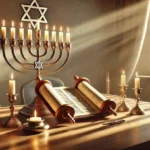
In 1922 Judith Kaplan took part in a public bat mitzvah at the Society for the Advancement of Judaism in New York. In her later account she remembers waiting through the morning prayers and the Torah reading. Once the scroll had been rolled up and covered, she stood below the bimah, the raised platform, and said a blessing. She then read a passage her father had selected from her own printed Humash, a volume of the Five Books of Moses, and followed it with the English translation and a closing blessing. Judith Kaplan Eisenstein’s firsthand recollection
Her account lets us see the precise form of that participation. She read Torah aloud in the synagogue, after the congregation’s reading from the scroll. The book she used, the location where she stood and the moment she began tell us more about the occasion than the general description of a public reading. Eisenstein on her place in the service
What a participant took from her preparation
Writing in 2010 about her own bat mitzvah at Shira Hadasha in Jerusalem, Tamar Lindenbaum describes learning to chant, studying biblical blessings and preparing projects of kindness. She remembers hearing her grandfather’s Hebrew name when he was called to the Torah and recognizing in it the name of her great-grandmother. The moment led her to connect the ceremony and her decision to ask guests to give to charities with the family stories she had heard about caring for others. Her account shows how the service and preparation came together for one participant. Tamar Lindenbaum, Mi’dor l’dor, pp. 44–45
Conclusion
Bat mitzvah concerns becoming responsible for the commandments. The occasions that recognize it have taken different forms. The Baghdad text describes a blessing a girl can say herself, the Florence prayer asks a blessing for her, and Kaplan recalls reading from a printed Torah. Lindenbaum’s account shows how preparation and public participation can give that responsibility a meaning she could articulate in her own words. For the work involved in preparing to chant, see the article on learning to read Torah.
Published by Ralf. About our editorial process.



