
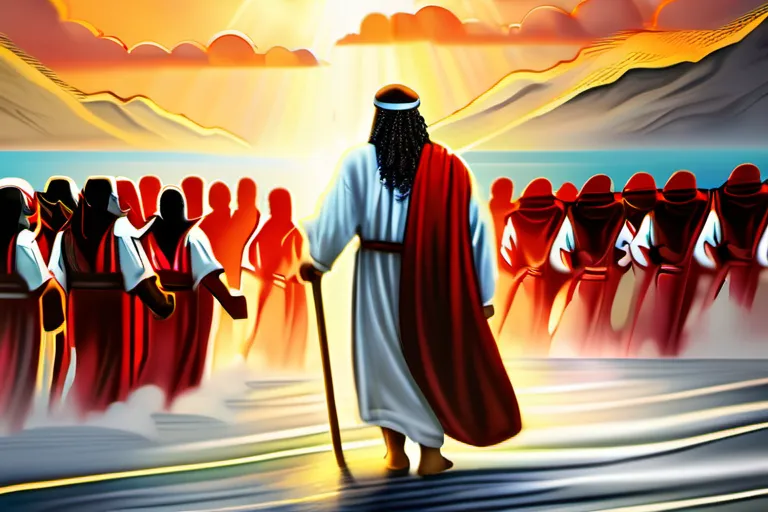
Moses is the prophet who leads the Israelites out of slavery in Egypt and receives divine instruction at Sinai in the Torah. In Jewish tradition he is often called Moshe Rabbeinu, meaning “Moses, our teacher.” The title points to what he does after the departure from Egypt. He teaches the people how to live by the covenant, appoints others to hear their disputes, and gives instructions for passing on what they have learned. His place in Judaism can be seen in the stories of liberation and in the way later readers understand that work of teaching. Rabbi Jonathan Sacks on Moses as teacher Moses in Jewish tradition
A leader who relies on others
Exodus begins Moses’ story with several people acting to keep him alive. His mother hides him and places him in a basket among the reeds by the Nile. His sister watches as Pharaoh’s daughter finds the child and offers to find a nurse. The nurse she brings is the child’s own mother, and Pharaoh’s daughter later adopts him. As an adult, Moses kills an Egyptian who was striking a Hebrew and flees to Midian, where he meets the daughters of a priest and later marries Zipporah. Exodus 2
After God calls Moses to bring the Israelites out of Egypt, Moses protests that he has difficulty speaking. In Exodus 4, God assigns his brother Aaron to speak on his behalf. The narrative presents the mission as shared work from the outset. Moses receives the instruction and tells Aaron what to say, and Aaron speaks to the people. The relationship anticipates later scenes in which the community’s access to instruction depends on several people carrying different responsibilities. Exodus 4:10–16

Teaching people to hear cases
Exodus 18 describes Moses sitting from morning until evening to judge disputes. Jethro, his father-in-law, sees the long wait and warns that the arrangement will exhaust Moses and the people. He advises Moses to teach the laws and appoint trustworthy judges for groups of different sizes. Those judges can decide ordinary disputes and bring difficult cases to Moses. In the story, a community gains access to justice when people trained to hear cases can respond locally and know when to seek further judgment. Exodus 18:13–26
Numbers 27 supplies a particular example of a difficult case. The five daughters of Zelophehad ask for their father’s share of land because he died without sons. Moses brings their claim before God. The response grants their request and gives a rule for comparable cases of inheritance. The episode shows how an individual petition can become the occasion for instruction addressed to the whole community. The daughters speak for themselves in front of Moses, the priest and the assembled leaders. Numbers 27
Joshua and the public reading
Later in the same chapter, Moses asks God to appoint someone to lead the community after him. He is told to bring Joshua before Eleazar the priest and the assembly, lay his hand on him and commission him publicly. The presence of witnesses matters to the story. The Israelites can see whom Moses has been instructed to charge with leadership, and Joshua’s role is defined in relation to Eleazar and the community. Numbers 27
Deuteronomy 31 describes another handover. Moses writes down the instruction and gives it to the priests and elders. He directs that it be read publicly every seven years during Sukkot, the Festival of Booths. The gathering includes men, women, children and resident foreigners. The passage singles out children who have yet to hear the teaching. A recurring public reading gives a new generation a way to learn the covenant as it reaches an age to understand and follow it. Deuteronomy 31
How Jewish tradition remembers Moses as teacher
Pirkei Avot, a tractate of the Mishnah, opens by saying that Moses received Torah at Sinai and passed it to Joshua. The chain continues through elders, prophets and the Men of the Great Assembly. The opening also attributes to that assembly a duty to raise up many students. This is a rabbinic account of continuity, in which the act of receiving instruction carries the responsibility of handing it on. Rabbi Jonathan Sacks connects that responsibility to the title Moshe Rabbeinu and to Moses’ final commands concerning public reading and teaching. Pirkei Avot 1:1 Rabbi Jonathan Sacks on Moses as teacher
That continuity takes a visible form at Simchat Torah. In the practice Chabad describes, the synagogue reads the final verses of Deuteronomy, including the account of Moses’ death, and immediately starts again at Genesis. Two readings place the close of his life and the renewal of the community’s study in the same service. Chabad’s account of Simchat Torah
Conclusion
The Exodus establishes Moses as the leader who brings the Israelites out of bondage. Sinai and the later accounts establish his role as a teacher. He makes room for judges to hear disputes, commissions Joshua before witnesses and gives future generations a place at the public reading. The Jewish title “our teacher” recalls the work that allows the community to keep learning after his death. Exodus 18:13–26 Numbers 27 Deuteronomy 31 Rabbi Jonathan Sacks on Moses as teacher
Published by Ralf. About our editorial process.



