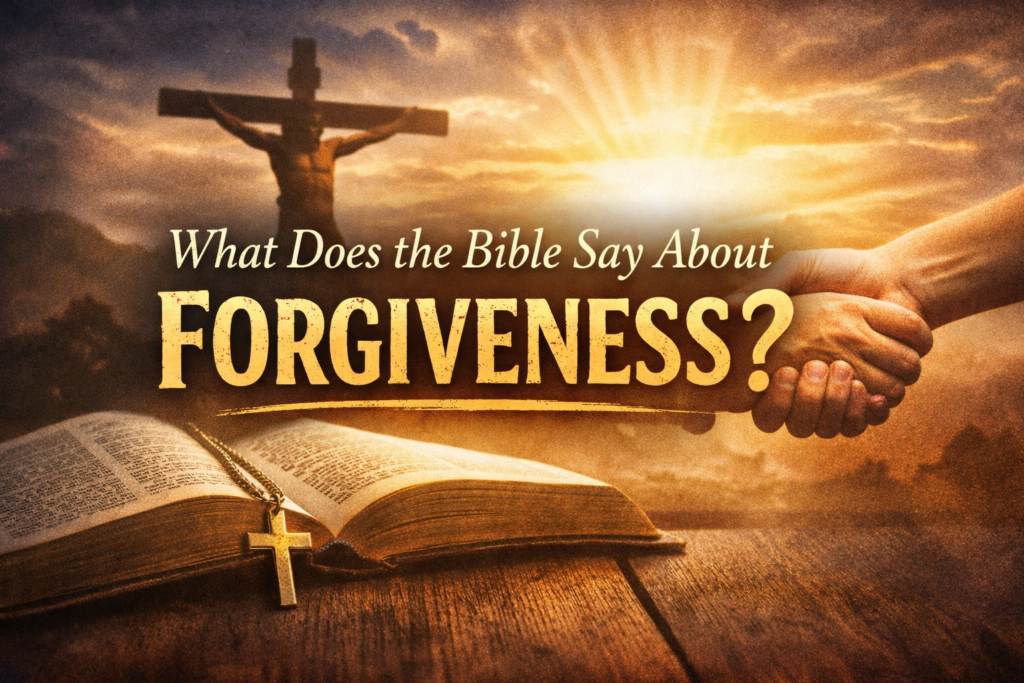
Forgiveness is one of the most powerful and challenging teachings in the Bible. It touches personal pain, broken relationships, justice, mercy, and the very nature of God. Many people search for biblical guidance on forgiveness because they struggle with betrayal, resentment, guilt, or the fear that forgiving means excusing wrongdoing.
This comprehensive guide explores what the Bible truly says about forgiveness, drawing from both the Old and New Testaments, key biblical passages, and practical applications for everyday life.
The Biblical Meaning of Forgiveness
In the Bible, forgiveness is not merely an emotional release or a psychological coping strategy. It is a deliberate moral and spiritual act rooted in God’s character.
Biblically, forgiveness means:
- Releasing a person from the debt caused by their wrongdoing
- Letting go of the right to personal revenge
- Choosing mercy over resentment
- Entrusting justice to God
Forgiveness does not mean:
- Denying that harm was done
- Minimizing injustice
- Automatically restoring trust
- Avoiding boundaries or accountability
Forgiveness in the Old Testament
Contrary to popular belief, forgiveness is not exclusive to the New Testament. The Old Testament consistently portrays God as merciful, patient, and forgiving.
Key themes include:
- God’s willingness to forgive repentant sinners
- The connection between forgiveness and covenant faithfulness
- Justice balanced with mercy
Key Old Testament Verses on Forgiveness
- “The Lord is compassionate and gracious, slow to anger, abounding in love.” (Psalm 103:8)
- “If you, Lord, kept a record of sins, Lord, who could stand?” (Psalm 130:3)
- “Return to the Lord your God, for he is gracious and compassionate.” (Joel 2:13)
Forgiveness in the Old Testament often involves repentance, confession, and restoration of relationship with God.
Forgiveness in the Teachings of Jesus
Jesus placed forgiveness at the very center of spiritual life. He did not treat it as optional but as essential for anyone who follows God.
Forgiving Without Limits
When Peter asked how many times he must forgive, Jesus answered:
“Not seven times, but seventy-seven times.” (Matthew 18:22)
This teaching emphasizes:
- Forgiveness as a repeated commitment
- The rejection of calculated limits
- A heart posture, not a numeric rule
The Parable of the Unforgiving Servant
In Matthew 18:21–35, Jesus tells a story of a servant forgiven an enormous debt who then refuses to forgive a smaller one. The message is clear: those who receive God’s mercy are expected to extend mercy to others.
God’s Forgiveness as the Foundation
The Bible consistently presents human forgiveness as a response to God’s forgiveness.
- “Forgive as the Lord forgave you.” (Colossians 3:13)
- “While we were still sinners, Christ died for us.” (Romans 5:8)
Christian forgiveness flows from gratitude, not moral superiority. It acknowledges that all people stand in need of grace.
Forgiveness and Repentance: Are They Always Linked?
A common question is whether forgiveness requires repentance from the offender.
Biblically:
- God’s forgiveness often follows repentance
- Believers are called to forgive even when repentance is absent
- Reconciliation may depend on repentance, but forgiveness does not
Jesus forgave those who crucified Him while they were still mocking Him (Luke 23:34). This demonstrates forgiveness as an act of love, not a reward for remorse.
Forgiveness vs. Reconciliation
The Bible makes an important distinction between forgiveness and reconciliation.
- Forgiveness is a personal decision to release resentment
- Reconciliation is the restoration of trust and relationship
Reconciliation may require:
- Genuine repentance
- Changed behavior
- Time and wisdom
Forgiveness can happen internally, even when reconciliation is unsafe or impossible.
Forgiveness and Justice
Biblical forgiveness does not eliminate justice.
- “Do not avenge yourselves, but leave room for God’s wrath.” (Romans 12:19)
- “The Lord loves justice.” (Psalm 37:28)
Forgiveness means surrendering personal revenge, not ignoring wrongdoing. God’s justice and mercy coexist throughout Scripture.
Forgiving Others as a Spiritual Requirement
The Bible is direct and challenging on this topic.
- “If you do not forgive others their sins, your Father will not forgive your sins.” (Matthew 6:15)
- “Be kind and compassionate to one another, forgiving each other.” (Ephesians 4:32)
These verses emphasize that forgiveness reflects the condition of the heart, not perfection but willingness.
Forgiveness and Emotional Healing
While forgiveness is a spiritual act, it also brings emotional benefits acknowledged throughout Scripture:
- Freedom from bitterness
- Peace of mind
- Restoration of inner integrity
The Bible recognizes that forgiveness can be difficult and painful, but it ultimately leads to healing and freedom.
Practical Steps to Practice Biblical Forgiveness
- Acknowledge the pain honestly
- Choose forgiveness as an act of obedience
- Pray for strength, not just feelings
- Release the desire for revenge
- Set healthy boundaries if necessary
- Trust God with justice and outcomes
Forgiveness is often a process, not a one-time moment.
Common Misunderstandings About Forgiveness
- Forgiveness does not mean forgetting
- Forgiveness does not excuse abuse
- Forgiveness does not remove consequences
- Forgiveness does not require reconciliation
The Bible supports wisdom, accountability, and protection alongside mercy.
Why Forgiveness Matters in the Christian Life
Forgiveness reflects:
- God’s character
- The message of the Gospel
- Spiritual maturity
- Freedom from spiritual bondage
Without forgiveness, faith becomes hollow and relationships become fragile.
Frequently Asked Questions (FAQ)
What does the Bible say about forgiving someone who is not sorry?
The Bible encourages forgiveness even when repentance is absent, while leaving reconciliation and justice in God’s hands.
Does forgiving mean I must trust the person again?
No. Trust must be rebuilt over time and may require evidence of change.
Is forgiveness optional according to the Bible?
Biblically, forgiveness is presented as essential, not optional, for those who seek God’s forgiveness.
How many times should I forgive someone according to the Bible?
Jesus taught forgiveness without limits, emphasizing continual grace rather than counting offenses.
Does forgiveness mean forgetting what happened?
No. The Bible never commands forgetting, but choosing not to hold the offense against the person.
What if forgiving feels impossible?
The Bible acknowledges human weakness and encourages prayer, reliance on God, and gradual healing.
Final Reflection
The Bible presents forgiveness as one of the highest expressions of faith, love, and spiritual freedom. It is not easy, and it does not deny pain or injustice. Instead, it invites believers to release the burden of resentment and trust God with healing, justice, and restoration.
Forgiveness is not about excusing the past—it is about transforming the future.