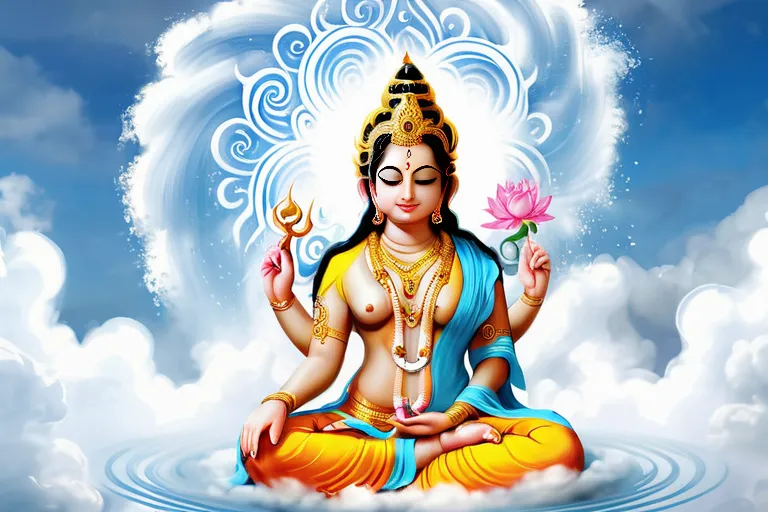
Hindu traditions explain suffering through several connected ideas, including karma, rebirth, attachment, spiritual ignorance and the search for liberation. Their explanations differ across schools and communities. A religious account of suffering should not be turned into a claim that an observer knows the past actions responsible for another person’s hardship.
What does karma mean in this discussion?
The Hindu American Foundation’s discussion of karma begins with action, including thought, speech and bodily conduct. Karma concerns actions and their consequences, rather than an external judge assigning arbitrary rewards and punishments.
Within accounts that connect karma with rebirth, consequences can extend beyond the present life. That is a religious explanation of continuity and responsibility; it is not a method for establishing the hidden cause of a particular illness, loss or injustice.
Does karma make people helpless?
Not in the account given by the sources used here. Present conduct remains important. The Hindu American Foundation explicitly rejects a fatalistic caricature in which suffering means that help is unnecessary or undeserved. Its explanation connects wise and selfless action with alleviating the suffering of living beings.
A claim about moral consequences and a decision about how to respond to someone in distress are separate questions. Neither a general doctrine nor a person’s outward circumstances licenses a stranger to pronounce on that person’s spiritual worth.
What does the Bhagavad Gita say about pain?
Bhagavad Gita 2.14 describes experiences of pleasure and pain as changing and calls for steadiness in facing them. The linked English translation and commentary are by A. C. Bhaktivedanta Swami Prabhupada and represent a Vaishnava devotional interpretation, rather than the only Hindu reading.
The verse addresses endurance and orientation amid changing experience. It does not provide a specific diagnosis of why an individual is suffering, and its religious teaching should not be mistaken for a promise that bodily pain is imaginary or will immediately disappear.
Does spiritual practice include concern for others?
Bhagavad Gita 6.32 links the understanding of others’ happiness and distress with comparison to one’s own experience. In the accompanying devotional commentary, concern for the welfare of others is part of spiritual life.
A Himalayan Academy discussion of the emotions, from a Shaiva educational setting, likewise connects karuna with compassion, including toward people outside one’s immediate circle. These are named examples of Hindu responses to suffering; they do not establish that every practitioner reacts identically.
What about liberation?
The Hindu American Foundation’s educational account of karma, moksha and samsara places rebirth within a wider spiritual goal of liberation. In that framework, explaining an unpleasant event is not the whole religious project. The relationship between action, spiritual development and release from rebirth also matters.
How can these explanations be read fairly?
Ask which text or community is being described. Distinguish an explanation of existence, an instruction about one’s own conduct and an obligation toward another person. Keep compassion and responsibility visible rather than reducing a diverse set of teachings to “everything happens because someone deserves it.”
How does detachment relate to responsible action?
In Bhagavad Gita 2.47, Krishna distinguishes performing one’s duty from attachment to its results, and also warns against attachment to inaction. In the linked Vaishnava translation and commentary, this concerns how Arjuna should act, rather than permission to stop caring about consequences or other people.
This gives an important distinction within a discussion of suffering: uncertainty about the outcome need not remove responsibility for present conduct. Trying to help a person and demanding control over every result are different things. The passage can be discussed as a religious account of action without turning it into a claim that effort always produces the desired worldly reward.
Is moksha simply a life with fewer unpleasant events?
The HAF educational account connects moksha with release from samsara, the cycle of birth and rebirth. It distinguishes accounts emphasizing self-realization in this life from devotional accounts emphasizing relationship with God and release after death. The spiritual goal is therefore broader than acquiring more comfortable circumstances within the same cycle.
That distinction helps explain why suffering is discussed alongside ignorance, attachment and spiritual understanding. Different Hindu schools interpret the self and the divine differently, so their descriptions of liberation should remain identifiable. A general overview can show the shared question of release without claiming that every school gives the same answer.
Conclusion
Hindu explanations of suffering place action and its consequences within wider questions of attachment, spiritual understanding and liberation. The sources discussed here connect those questions with present responsibility and compassion, while offering different accounts of the path to moksha. They should be read as named religious perspectives rather than a way to diagnose someone else’s misfortune. Understanding the tradition requires both its explanation of existence and its response to people who suffer.
Reviewed and substantially revised on 1 November 2026. Named Hindu institutional perspectives and a specific Gita translation are identified above. See our editorial approach and AI transparency.
Published by Ralf. About our editorial process.