

Hindus worship different deities because Hindu traditions offer several ways of understanding and relating to the divine. Some devotees approach a particular deity as the supreme personal God. Others understand several divine forms as expressions of Brahman, ultimate reality. A person may also honor several deities while maintaining a special devotion to one.
There is consequently no single answer that describes every Hindu community. The question becomes clearer when we distinguish the number of forms worshipped, the relationship between those forms, and the philosophical understanding of reality behind the worship.
Why the label “polytheism” needs explanation
Polytheism ordinarily means belief in or worship of more than one deity. It can describe the visible presence of several gods and goddesses in Hindu religious life. It does not, by itself, tell us whether worshippers regard those deities as independent beings, manifestations of one reality, or beings related to a supreme Lord.
Monotheism emphasizes one supreme God; nondualism concerns the ultimate absence of a division in reality. These terms ask different questions. Counting the images on a household shrine cannot settle a philosophical question about the nature of God, the self, and the world.
The Hindu American Foundation’s introduction emphasizes Brahman and several broad deity traditions: Shaiva, Vaishnava, Shakta, and Smarta. It is a useful contemporary Hindu account, although no organization speaks for every Hindu lineage or interpretation. These categories also contain differences of their own.
Several divine names already appear in Vedic hymns
Hindu sacred literature contains both addresses to multiple deities and reflection on unity. In Rigveda 5.46, the speaker invokes figures including Agni, Indra, Varuna, Mitra, Vishnu, and Sarasvati. The hymn asks for protection, assistance, and well-being. It presents worship as a relationship with divine powers, rather than simply a list of abstract human qualities.
A different but related example appears in Rigveda 1.164.46. In Ralph T. H. Griffith’s English translation, several divine names are associated with what is one. This verse provides an important example of reflection on unity amid plurality. A single verse does not establish that all Vedic hymns teach an identical philosophy or that every later Hindu school interprets them in the same way.
The presence of Vishnu in a Vedic hymn also cautions against a simple story in which all familiar deities were invented only after the Vedas. Names, narratives, ritual settings, and theological importance can change over time. Continuity of a name and identity of an entire religious tradition are different historical claims.
Devotion to one deity can be a complete religious path
For many worshippers, devotion is a relationship involving love, service, trust, and religious discipline. A preferred deity is therefore more than a convenient symbol for a personality trait. The deity may be understood as the source of existence and the one who grants liberation.
A clear Vaishnava example is Brahma-samhita 5.1 in the Gaudiya Vaishnava presentation. It identifies Krishna, also called Govinda, as supreme and the cause of all causes. Within that account, Krishna is not merely one interchangeable figure among several equally ultimate gods. Other Vaishnava lineages explain the relationships among Krishna, Vishnu, and other divine forms in their own ways.
In Bhagavad Gita 9.26, Krishna accepts a simple offering made with devotion: a leaf, flower, fruit, or water. The example helps explain the personal character of bhakti, or devotion. An elaborate display of wealth is not the point of this verse; the relationship expressed through the offering matters.
Divine manifestation is another part of this religious language. Bhagavad Gita 4.7 describes Krishna’s manifestation when religious order declines. This helps illuminate the idea of an avatar. It does not mean that every deity is a human incarnation or that all Hindu traditions use an identical list of manifestations.
Different philosophies explain unity differently
Advaita Vedanta offers a nondual account of ultimate reality. The Sringeri tradition’s explanation distinguishes ultimate reality from the ordinary level at which people act, learn, and worship. Its account insists that acknowledging Brahman as ultimately real does not make religious practice or responsible action irrelevant.
Sringeri’s presentation of devotional hymns and divine forms describes worship of Shiva, Devi, Vishnu, Surya, Ganapati, and Kumara within a shared understanding of the supreme. This supplies a concrete example of how multiple forms of worship can coexist with an account of divine unity.
That explanation should not be imposed on all Hindu theology. Uttaradi Math’s account of Madhva’s Dvaita Vedanta affirms a supreme God, named Vishnu or Narayana, while maintaining real distinctions among God, souls, and matter. Souls remain distinct even in liberation. Its teaching differs substantially from an interpretation in which every distinction disappears at the ultimate level.
The contrast matters when using words such as maya, often translated as illusion. Treating everything as a meaningless deception misrepresents Sringeri’s explanation of ordinary reality; treating that explanation as a universal Hindu creed misrepresents Dvaita. A philosophical term needs the context of the school using it.
Goddesses are not merely supporting characters
In Shakta traditions, the Goddess can be understood as the supreme divine reality. Describing all goddesses only as wives, assistants, or qualities of male gods misses this possibility. The forms and narratives of the Divine Mother can provide the center of a devotee’s religious life.
The Ramakrishna tradition’s account of Durga Puja at Belur Math explains worship of God as Mother through an intimate relationship of care and dependence. It also recounts Durga’s defeat of Mahishasura in the Chandi narrative. This is a theological and devotional story about the Goddess overcoming destructive power, not an independently verified account of an ancient military event.
The same account describes a consecrated Durga image as the living Goddess present to devotees. That language shows why identifying Durga only with a psychological quality such as courage gives an incomplete explanation of worship.
Divine images communicate more than a single job description
Descriptions such as creator, preserver, or destroyer can help introduce a deity, but they can also become misleadingly rigid. Shiva, for example, is not confined to a destructive role. Stories and images convey overlapping powers, relationships, and possibilities for liberation.
The Metropolitan Museum of Art’s catalogue of a late eleventh-century Shiva Nataraja from Tamil Nadu explains several functions within one image. The drum is associated with creation, the flame with destruction, a hand gesture with reassurance, and the raised foot with refuge. The surrounding dance expresses cosmic activity rather than a simple opposition between a benevolent preserver and a malevolent destroyer.
This museum interpretation concerns a particular sculptural form and object. It does not mean that every image of Shiva has identical attributes or that an artwork can summarize every Shaiva teaching. It demonstrates how carefully chosen details carry religious meaning.
Why worship a murti?
A murti is a sacred divine image. Looking only at its material—stone, metal, or clay—does not explain how it functions in worship. Nor is it sufficient to describe every murti as an optional visual reminder of an absent deity.
The BAPS London temple’s explanation of murti puja describes consecration, or pran-pratishtha, as establishing the living presence of the deity in an image. The community then serves the deities through daily worship. This is an account from a particular Swaminarayan tradition, not a claim that every Hindu school interprets images or consecration identically.
Other explanations emphasize images as aids to concentration or as forms through which the unlimited divine becomes approachable. The important starting point is the worshipper’s understanding of the relationship. An outside observer’s word “statue” identifies an object but leaves that relationship unexplained.
What multiple forms mean in everyday devotion
A household’s worship may reflect family practice, a local temple, a teacher’s lineage, or a particular devotional commitment. Honoring Ganesha, worshipping the Goddess at a festival, and maintaining a central devotion to Vishnu need not be experienced as competing affiliations. Equally, some lineages place strong emphasis on worship of a particular supreme Lord.
To understand a specific shrine or ritual, useful questions include which deity is central, what texts and teachings shape the practice, and how devotees understand the other divine figures present. The answers are more informative than assuming either that all Hindus worship every deity or that all distinctions between deities are unimportant.
Conclusion
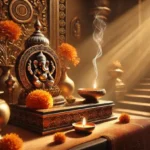
The worship of several Hindu deities can express different relationships with the divine: devotion to a supreme personal Lord, reverence for the Goddess, recognition of several forms of one reality, or a combination shaped by a particular tradition. A visible plurality of divine forms does not supply a single answer about ultimate reality.
The most useful approach is to connect a deity’s stories and images with the community’s philosophy and practice. Doing so allows divine unity and diversity to be understood in their own contexts, without reducing living gods and goddesses either to rival supernatural personalities or to interchangeable symbols.
Published by Ralf. About our editorial process.




1 thought on “Why Hindus Worship Different Gods: Devotion, Philosophy, and Sacred Images”