
Shinto is a Japanese religious tradition centered on the veneration of kami through rites at shrines, homes and other sacred places. Shrine visits can also be customary parts of family and public life. That overlap helps explain why someone may take part in a Shinto rite while describing their religious identity differently. In modern Japan, the question has also mattered to the state. An occupation directive and two Japanese Supreme Court decisions distinguish the religious character of shrine worship from the purpose of particular acts by public authorities. Jinja Honcho’s shrine guide Shinto Directive, December 1945 Supreme Court of Japan, Tsu ruling, 1977 Supreme Court of Japan, Ehime ruling, 1997 Jinja Honcho’s questions and answers
What people do at a shrine
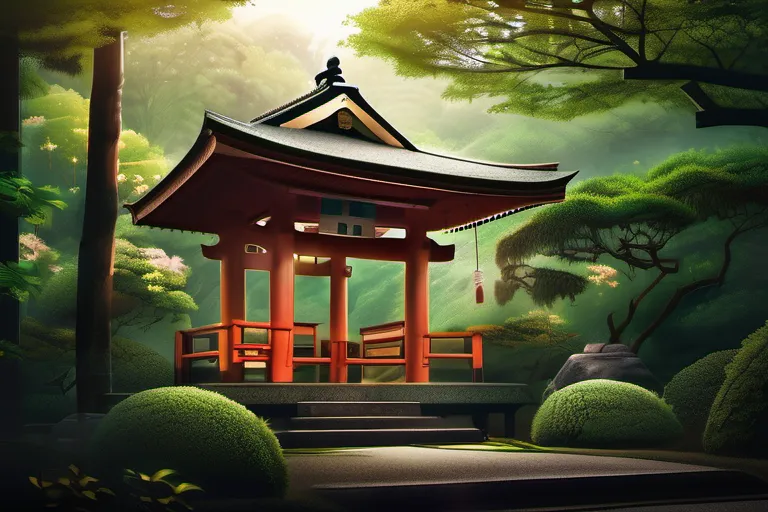
A Shinto shrine, or jinja, enshrines one or more kami. The Association of Shinto Shrines, Jinja Honcho, describes kami associated with features such as a mountain or river, as well as kami known from myths or identified with historical figures. Visitors may come for a festival, to express thanks or to request help. A shrine’s priests perform offerings and other rites, and a visitor can pay respects outside the main sanctuary. These are concrete reasons for describing Shinto as a religion. They involve dedicated sacred spaces, acts of veneration and people entrusted with performing rites. Jinja Honcho’s shrine guide Jinja Honcho’s illustrated guide
The main sanctuary is often reserved for the kami, and the ordinary visitor may pay respects from a separate prayer hall or from outside it. At some shrines the focus is a place in the landscape rather than a building. The association also describes ceremonies for specific requests in which people arrange for a priest to pray on their behalf. These practices bring worshippers into contact with the shrine in different ways. Jinja Honcho’s shrine guide Jinja Honcho’s illustrated guide
A shrine can also be a place someone visits because the occasion matters to a family or neighborhood. A New Year visit, known as hatsumode, is one example. Visitors can take part in the custom without being asked to give an exclusive account of their religious identity. The customary occasion and the rite performed there are two aspects of the same visit. A survey asking about religious affiliation and a survey asking who visited a shrine could therefore give different pictures of participation. Jinja Honcho’s illustrated guide Jinja Honcho’s questions and answers
Why the official classification changed
The December 1945 Shinto Directive describes how the prewar Japanese government had distinguished state-supported Shrine Shinto from Sect Shinto, which it treated as religious. The directive ended government sponsorship and control of State Shinto. It also said that Shrine Shinto, after separation from the state, could receive the same protection as other religions if its adherents wanted it recognized as such. That provision distinguishes ending an official system of sponsorship from protecting voluntary religious practice. Shinto Directive, December 1945
A Japanese Diet committee record from 1949 describes a practical consequence of the directive. A February 1946 change to the religious corporations ordinance opened a route for shrines to register as religious bodies. The change gave a shrine an organizational form in which it could continue its activities after the old system of state supervision ended. Shinto Directive, December 1945 Japanese Diet committee record, May 1949
Article 20 of Japan’s postwar constitution guarantees freedom of religion, bars compulsory participation in religious acts and places limits on religious activities by the state. Article 89 restricts the use of public funds for religious institutions and associations. Those rules still leave a question when a public body takes part in an act with religious associations. The Supreme Court has examined the purpose and effect of the specific act in its social context. Constitution of Japan, Articles 20 and 89 Supreme Court of Japan, Tsu ruling, 1977 Supreme Court of Japan, Ehime ruling, 1997
Two cases about what public authorities paid for
In 1977, the Supreme Court considered a groundbreaking ceremony for a municipal gymnasium in Tsu. Shinto priests performed a rite and the city paid the cost. The Court examined how the ceremony was understood in context. Its majority treated the rite as a customary way of marking the beginning of construction and praying for safe work. It concluded that the city’s act had a secular purpose and did not have the effect of promoting Shinto or interfering with another religion. The fact that priests performed a Shinto rite was one part of the Court’s inquiry. Supreme Court of Japan, Tsu ruling, 1977
In 1997, the Court reached a different result in a case about Ehime Prefecture. Public money had been used repeatedly for offerings connected to annual ceremonies at Shinto shrines. One set of payments consisted of nine offerings of 5,000 yen each for spring and autumn ceremonies. The prefecture had presented the payments as customary expressions of respect. The majority concluded that the payments had religious significance and provided support to the shrines, and held them unconstitutional. The contrast with Tsu depends on the recipient, the occasion and the connection between the public expenditure and the worship conducted there. Supreme Court of Japan, Tsu ruling, 1977 Supreme Court of Japan, Ehime ruling, 1997
Conclusion
Shinto is a religion in the sense that its shrines and rites give people ways to venerate kami. Some of those rites also have a place in public custom, and people take part for different reasons. The postwar directive changed the relationship between government and shrines. The two court rulings show why the constitutionality of a government’s participation turns on what the government does in a particular setting. Jinja Honcho’s shrine guide Shinto Directive, December 1945 Supreme Court of Japan, Tsu ruling, 1977 Supreme Court of Japan, Ehime ruling, 1997
Published by Ralf. About our editorial process.



