
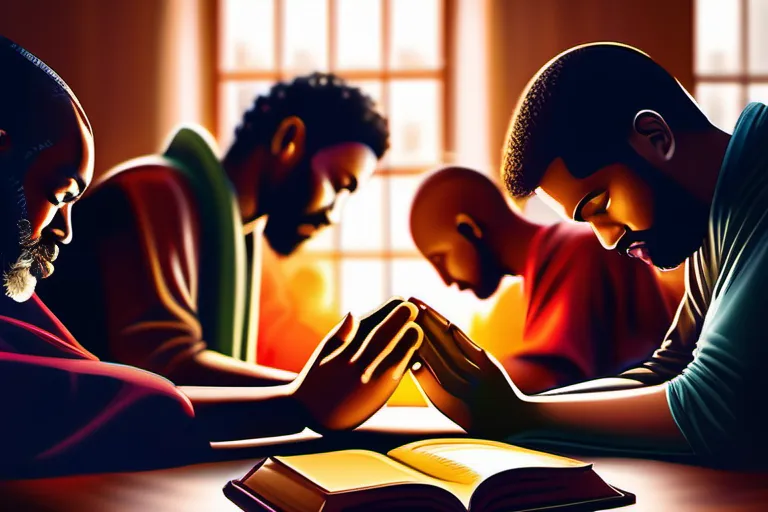
A born-again Christian understands Christian life as beginning with a new birth brought about by God. The expression comes from Jesus’ conversation with Nicodemus in John 3. In evangelical usage, it commonly emphasizes personal repentance, faith in Jesus Christ, and a life changed by the Holy Spirit.
“Born again” does not name one denomination with a single headquarters, governing structure, or complete set of distinctive doctrines. It describes a theological conviction and, for many believers, a personal identity. Its meaning overlaps with evangelical Christianity, but the two expressions are not interchangeable in every context.
What Jesus says to Nicodemus
In John 3:1–17, Nicodemus visits Jesus at night and acknowledges his signs. Jesus responds that seeing God’s kingdom requires new birth. Nicodemus takes this as a puzzling reference to another physical birth; Jesus speaks instead of water and the Spirit.
The USCCB note on John 3:3 explains that the Greek anōthen can mean both “again” and “from above.” The double meaning matters. New birth concerns a new beginning whose source is divine, rather than a person simply deciding to become a more successful version of the same self.
The passage’s comparison with wind also emphasizes that the Spirit’s action exceeds ordinary human control. Later verses connect eternal life with belief in the Son and God’s love for the world. A Christian interpretation therefore places the experience within God’s saving action through Christ, rather than treating it as an isolated feeling.
The central beliefs behind evangelical usage
A useful example of the wider evangelical setting is the National Association of Evangelicals’ statement of faith as affirmed and reproduced by Denver Seminary. It joins several convictions:
- God is one, eternally existent as Father, Son, and Holy Spirit.
- Jesus Christ is divine; his life, atoning death, bodily resurrection, and promised return are central to salvation.
- Regeneration by the Holy Spirit is necessary for salvation.
- The indwelling Spirit enables Christian living.
- The Bible is inspired and authoritative, and believers share spiritual unity in Christ.
These beliefs explain why being born again involves more than adopting a positive attitude or joining an organization. The claim concerns reconciliation with God through Christ. They are also beliefs shared with other Christians in important respects; the phrase does not imply that Jesus, the Trinity, or the Holy Spirit belong only to people who use this particular label.
Repentance, faith, and regeneration
The Southern Baptist Convention’s Baptist Faith and Message, Article IV, defines regeneration as a work of God’s grace in which the Holy Spirit brings about a change of heart. The human response is repentance toward God and faith in Jesus Christ. Repentance concerns turning from sin; faith concerns trust and commitment, rather than merely recognizing a religious claim as interesting.
John 1:12–13 connects receiving Christ and believing in his name with becoming God’s children, while insisting that their birth is from God. That combination helps explain why evangelical descriptions can speak both of responding personally and of a change no person can manufacture unaided.
Titus 3:3–7 likewise grounds salvation in divine mercy rather than previously accomplished righteous deeds, using the language of regeneration and renewal by the Holy Spirit. The text links new life with grace and hope, not a record of sufficient moral achievement.
Must conversion be sudden or dramatic?
A memorable conversion testimony is one way believers describe their experience. It is not the only Christian account of coming to faith. The United Methodist Church’s explanation of Wesleyan theology says conversion can be sudden and dramatic or gradual and cumulative. It places new birth within an ongoing life of grace and sanctification.
This distinction matters for someone raised in a Christian household who cannot name the exact hour faith began. An account of experience and a claim about God’s action are not identical things. The absence of a striking story does not, by itself, answer the theological question of new birth.
Likewise, the intensity of an emotion cannot establish lasting transformation on its own. Tears, relief, enthusiasm, and a public declaration may accompany conversion, but they do not replace the question of what the person believes and how life develops afterward.
New birth and water baptism
Christians disagree about baptism’s relationship to regeneration. Article VII of the Baptist Faith and Message describes immersion of a believer as an act of obedience symbolizing faith in Christ and new life. On that account, baptism publicly expresses a faith already professed.
The Catholic Catechism, paragraph 1213, speaks instead of baptism itself as the sacrament of regeneration through water and the word, freeing from sin and incorporating the person into Christ and the Church. This shows that the language of rebirth extends beyond evangelical conversion accounts.
These explanations should not be flattened into a claim that every church understands baptism as only a symbol, or that Catholics have no concept of new birth. The disagreement concerns how God’s gift, faith, sacrament, and membership relate to one another.
The Holy Spirit—and a significant Pentecostal distinction
Romans 8:9–17 connects belonging to Christ with the Spirit’s presence, guidance, and witness to adoption as God’s children. It also speaks of suffering with Christ. The Spirit’s presence is therefore not presented as a guarantee that every believer’s circumstances will become comfortable.
“Baptism in the Holy Spirit” requires particular care. The Baptist Faith and Message associates the Spirit’s baptism into Christ’s body with regeneration. By contrast, the Assemblies of God’s Statement of Fundamental Truths, sections 7–8, describes baptism in the Holy Spirit as distinct from and subsequent to new birth, empowering life and service. It identifies speaking in tongues as its initial physical evidence.
That is a specific Pentecostal position. It should not be presented as the definition accepted by all born-again Christians. Nor can its teaching about a subsequent experience be accurately summarized as saying that the Spirit is entirely absent until that experience occurs.
Scripture, prayer, and community
Evangelical emphasis on biblical authority makes preaching and study important to faith and conduct. The NAE statement gives Scripture an authoritative place, but citing that shared conviction does not settle every disagreement about interpretation. A claim of spiritual guidance still needs to be assessed in relation to the text and the teaching being proposed.
Acts 2:41–47 gives a concrete picture of communal Christian life: baptism, apostolic teaching, fellowship, shared meals, prayer, and assistance according to need. Personal faith in this account leads into relationships and shared obligations.
Church organization varies. The Southern Baptist statement, for example, describes an autonomous local congregation operating through democratic processes. That alone makes it inaccurate to prescribe one hierarchical structure for everyone identifying as born again.
Prayer also concerns more than obtaining desired results. Matthew 6:9–13 includes God’s kingdom and will, daily provision, forgiveness, and deliverance from evil. It gives specific content to dependence on God rather than promising that confident prayer will control every outcome.
What a changed life means
New birth and lifelong maturity should be distinguished. Galatians 5:22–26 describes the Spirit’s fruit through qualities including love, patience, gentleness, and self-control. These qualities direct attention to conduct, not merely religious vocabulary or a dramatic testimony.
For example, a person’s claim to new life becomes ethically meaningful when it is accompanied by honesty, willingness to acknowledge harm, and patient treatment of others. The passage does not provide a license to assume that a believer will immediately become flawless. It calls for a manner of living consistent with the professed source of life.
Conclusion
Being born again means receiving new life from God, understood through faith in Christ and the Holy Spirit’s work. In evangelical settings, the expression strongly emphasizes personal repentance and trust. Its biblical language also belongs to wider Christian debates about grace and baptism.
When someone uses the phrase, the most useful questions concern what they mean by new birth, how they relate it to baptism and conversion, and what changed life looks like in practice. Those questions reveal more than assuming that every born-again Christian belongs to the same church or has had the same experience.
Published by Ralf. About our editorial process.



