
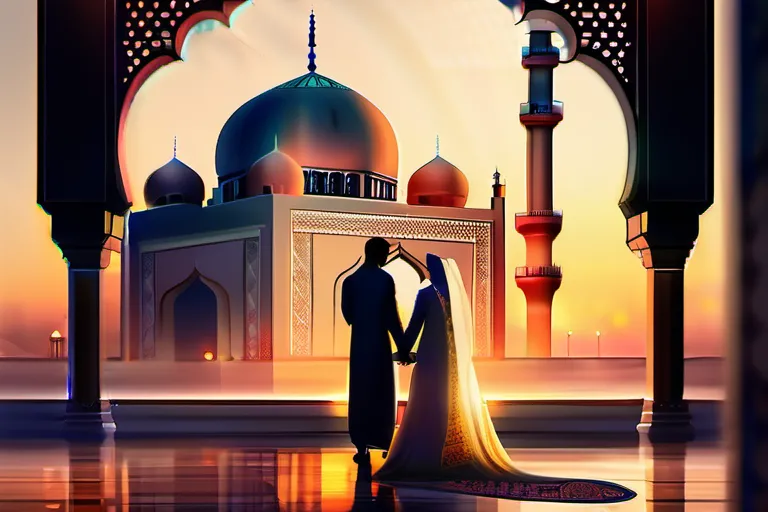
Islamic marriage, commonly called nikah, brings a contractual relationship into connection with religious commitments about family life, responsibility and conduct. Understanding it requires attention both to the marriage agreement and to the legal tradition and country in which it operates.
A wedding celebration, a religiously assessed contract and a marriage recognized by the state are related matters, but they are not automatically the same event. Their relationship affects questions about documentation, rights, financial obligations and the ending of a marriage.
Religious Significance: Affection, Mercy and Conduct
Qur’an 30:21 describes spouses through the language of comfort, affection and mercy. It supplies an important religious account of companionship and the significance of relationships. Qur’an 4:19 also addresses treatment of women, condemning practices of inheriting them against their will and calling for fair conduct toward wives.
These passages express responsibilities rather than guarantees about how every household will function. The history and practice of marriage include questions about power, resources, expectations and access to remedies when obligations are not met.
Studying the religious meaning alongside those practical arrangements makes the subject more concrete. Affection and good conduct concern the quality of a relationship; contractual and institutional questions concern the rights and procedures through which people can make claims.
What the Nikah Contract Establishes
The marriage contract involves a recognized agreement expressed through offer and acceptance, assessed according to a particular legal tradition. Jurists discuss the parties’ capacity, consent, the terms of the agreement, guardianship and other formal requirements.
Egypt’s Dar al-Ifta provides one Sunni account in its 2015 answer about a verbal marriage contract. It describes a spoken agreement made before witnesses and distinguishes the act of contracting from written documentation. The answer also emphasizes registration and the difficulty of proving a marriage for which authorities have no record.
This is a particular religious legal response. It does not establish that an undocumented ceremony has every civil effect in another country. Nor does it show that any written or electronic exchange automatically satisfies the formalities of every legal school.
Consent and Family Involvement
Consent is central to an account of adult marriage. Family participation can include introductions, advice and practical support, while the question of a person’s own agreement remains important.
A report in Sahih al-Bukhari describes Khansa bint Khidam, a previously married woman whose father arranged a marriage she disliked. She took the matter to Muhammad, who declared the marriage invalid. This is a concrete source for discussion of a woman’s opposition to an imposed marriage.
Religious legal discussions also address capacity, guardianship and how agreement is established. Their historical details should be distinguished from present statutory requirements. A family’s approval and the free agreement of the adults concerned answer different questions.
The UK government’s guidance on forced marriage identifies physical, emotional and psychological pressure as forms of coercion. Its legal framework has a defined jurisdiction and should not be treated as a description of every country’s law.
The Wali: A Role That Depends on the Tradition
A wali is a guardian whose role in marriage is explained differently across legal traditions. The term should not be reduced to a symbolic family blessing, because in some accounts it concerns the legal structure of the contract.
In a 2013 response, Dar al-Ifta explains Abu Hanifa’s position that an adult woman with legal capacity can conduct her own marriage contract, subject to the conditions discussed in that account. This illustrates why the wali cannot be presented as an identical requirement in every Muslim marriage.
The relevant questions concern which legal tradition is being followed, the parties’ circumstances and the authority assessing the contract. A description of a family member’s supportive role is not, on its own, an explanation of guardianship in jurisprudence.
Witnesses and Religious Formalities
Witnesses have an important role in many Sunni accounts of marriage. The Dar al-Ifta response on a verbal contract explicitly includes them. Other Muslim traditions formulate the requirement differently.
For example, the marriage guidance published by Ali al-Sistani’s office, representing a Twelver Shi‘a account, states that witnesses and the presence of a cleric are not conditions for the contract’s religious validity. This is an example of a specific doctrinal difference, rather than a universal rule about civil registration.
It follows that a list labelled “the requirements for an Islamic marriage” needs to identify its tradition and scope. Religious assessment of formalities and the state’s requirements for recognition must both be understood.
Mahr: A Financial Entitlement of the Wife
Mahr is a financial entitlement due to the wife within the marriage relationship. Qur’an 4:4 directs that women receive their marriage payments graciously and discusses a woman’s willing decision to relinquish part of what is due.
Descriptions in English sometimes use “dowry,” a word that can describe different transfers in different cultures. Identifying who is entitled to the payment avoids confusion: mahr belongs to the wife, rather than being a payment automatically owed to her family.
Terms can distinguish an immediate and a deferred portion. A 2015 Dar al-Ifta answer treats deferred mahr as a debt in its discussion of a deceased husband’s estate. The example shows that mahr can concern an actual financial claim, rather than only a ceremonial gift.
The amount, terms, evidence and applicable law affect how a claim operates. Its practical value as financial protection depends on payment, documentation and the means of enforcing the entitlement.
Rights, Responsibilities and the Marriage Document
Juristic discussions of marriage address financial maintenance, accommodation, property and conduct, alongside the agreement itself. These subjects have been interpreted through different accounts of spouses’ roles and authority.
The written record matters because it can provide evidence of what was agreed. A religious term, its interpretation and its enforceability in a civil court are separate questions. Their relationship depends on the relevant legal system and the actual document.
Debates about reform also concern this relationship. In its 2018 educational presentation, Musawah argues that distinguishing shariah, human jurisprudence and state laws is important to efforts toward equality in Muslim family law. This identifies a particular reform argument, rather than treating one interpretation as the position of all Muslims.
Religious Ceremony and State Recognition
State recognition determines civil consequences that cannot be inferred from the name “nikah” alone. A country may recognize a religious ceremony when statutory requirements are met, or may require a separate civil process.
For a concrete jurisdictional example, official guidance for England and Wales sets out conditions for religious weddings, including an appropriate registered building and the participation of an authorized person or registrar. The guidance also addresses notice and documentation.
Age requirements have their own statutory basis. The Ministry of Justice’s announcement of 27 February 2023 explains the change raising the minimum marriage age in England and Wales to 18 and the extension of protection concerning non-legally binding ceremonies. The jurisdiction is important: a statement about England and Wales is not a statement about every legal system.
These examples show why religious recognition, documentation and civil status need to be explained together. The legal effects arise from the applicable framework and facts.
Wedding Celebrations and Local Customs
The walimah, a wedding meal or banquet, has a place in the religious tradition. In Sahih al-Bukhari 5155, Muhammad encourages ‘Abd al-Rahman ibn ‘Awf to offer a wedding banquet following his marriage.
The ways families celebrate vary through local food, clothing, hospitality and expectations about gatherings. A shared reference to a wedding meal does not produce one worldwide wedding style or an identical scale of spending.
Our article on Islamic cultures explores how religious occasions interact with regional practices and material circumstances. Distinguishing those layers helps explain why a custom may be important to one community without being a universal contractual requirement.
Ending a Marriage: More Than One Legal Category
Islamic legal traditions discuss several ways a marriage can end. Talaq commonly concerns a husband’s repudiation; khul‘ concerns a form of release sought by the wife, often involving financial arrangements; and judicial dissolution involves action through a competent authority. The categories and their operation vary.
Qur’an 2:229 addresses retention or separation with proper conduct and discusses compensation in the context of ending a marriage. A report about the wife of Thabit ibn Qays describes a request for release and the return of a garden given as mahr. These are important sources in discussion of khul‘.
Waiting periods, or ‘iddah, also depend on circumstances. Qur’an 65:4, for example, addresses the waiting period of a pregnant woman. The existence of such distinctions shows why divorce cannot be described through one simple procedure applying identically to every case.
Religious and civil dissolution may involve different institutions and effects. A claim about whether a particular marriage has ended requires the relevant tradition, jurisdiction and circumstances, rather than a generic statement about talaq.
Conclusion
Islamic marriage connects religious commitments with a contractual relationship and its practical responsibilities. Consent, guardianship, witnesses, mahr and documentation need to be understood within particular legal traditions, while state recognition determines civil effects.
The examples in this guide reveal the value of keeping those layers visible. A supportive family, a religiously assessed agreement and an enforceable legal status each contribute something different. Understanding their relationship gives a firmer basis for discussing both marriage and the rights involved when it ends.
Published by Ralf. About our editorial process.



