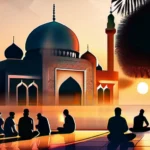
The Druze are a religious community whose faith places particular emphasis on the oneness of God. They often call themselves al-Muwahhidun, commonly translated as Unitarians or those who affirm divine unity. Here, the name refers to the Druze tradition, not to modern Unitarian churches. Their principal Middle Eastern communities are in Syria, Lebanon, Israel, and Jordan, alongside communities in the diaspora.
An accurate introduction needs to distinguish religious teaching, communal identity, and political circumstances. It also needs to respect the difference between publicly described beliefs and teachings studied within the initiated religious community. Privacy is not evidence that the Druze have no scripture, no history, or no engagement with the wider world.
Origins in the eleventh century
The Druze Heritage Foundation’s historical account places the movement’s emergence in Cairo in 1017, during the reign of the Fatimid caliph al-Hakim bi-Amr Allah. Its background was Ismaili Shi‘i Islam and the intellectual world of the Fatimid state. This locates its formation in the eleventh century, rather than the tenth.
The foundation identifies Hamza ibn Ali as the movement’s leader, assisted by other teachers. Al-Hakim’s reign is therefore central to the historical setting, but describing the caliph simply as the religion’s sole founder leaves out the work of those who articulated its teachings.
The familiar name Druze derives from al-Darazi. The foundation describes him as a figure rejected within the tradition, rather than its accepted spiritual model. This is one reason the community’s own designation, al-Muwahhidun, matters: an externally familiar name does not necessarily express how a religious community understands its authority or origins.
One God and a distinctive interpretive tradition
Divine unity, or tawhid, is central to Druze identity. That commitment should not be flattened into the claim that the tradition is identical to other forms of Islam. Historical origins and present religious distinctiveness are different questions.
In his 2011 study of Druze doctrine, historian Kais M. Firro examines both its Ismaili vocabulary and the new elements that developed beyond mainstream Ismailism. His analysis emphasizes esoteric interpretation: a text’s inward significance can take precedence over its outward, literal meaning.
Firro also discusses how Druze teaching reinterprets inherited ritual obligations through seven Unitarian principles. The important point for an introductory reader is that a shared vocabulary does not guarantee identical religious practice. It would be misleading to explain Druze life merely by transferring the standard Sunni account of prayer, fasting, and pilgrimage unchanged.
This is a description of a particular scholarly interpretation of religious texts. It does not authorize treating every Druze person as equally observant or as having the same access to advanced religious instruction.
The Druze have written sacred texts
The faith is not an exclusively oral tradition. The Bibliothèque nationale de France’s presentation of its Druze collections identifies a corpus of 111 eleventh-century epistles, known as the Epistles of Wisdom, or Rasa’il al-Hikma. Its collection includes manuscripts of sacred writings and other Druze texts.
Manuscript evidence directly contradicts the idea that the community preserved its beliefs without written scripture. At the same time, the existence of manuscripts in a public library should not be confused with unrestricted religious instruction within the community.
The distinction is between a text’s existence, a scholar’s access to a manuscript, and a participant’s preparation to study it within a living religious tradition. These are different kinds of access, with different purposes and expectations.
The ‘uqqal and the juhhal
Descriptions of Druze society distinguish the ‘uqqal, the initiated religious community, from the juhhal, those who are not initiated. The distinction concerns access to religious learning and a particular form of religious commitment; it does not mean that the uninitiated have no Druze identity or no ethical responsibilities.
Said R. Abou Zaki’s study of Druze religious attitudes toward violence describes the ‘uqqal’s role in preserving communal identity and providing guidance. This helps explain why religious authority cannot be reduced to one generic spiritual guide with an invented universal title.
The same study also illustrates a broader caution. Drawing on oral narratives about religious figures in Lebanon, it examines efforts to prevent aggression and condemn violence. Those findings concern a defined body of evidence; they do not make every Druze political actor a pacifist or prove that the community has always remained neutral in conflict. Religious ideals and political history require separate analysis.
Reincarnation and accounts of previous lives
Reincarnation, often called taqammus, is an important publicly discussed Druze belief. In a 2022 article based on interviews with Druze in Israel, Maha Natoor describes belief in the soul’s passage to another human life at death and its connection with divine justice and communal belonging.
Natoor also examines notq: accounts of remembering or speaking about a previous life. Her analysis treats these narratives as part of social and cultural life, helping people express and sustain identity. It also distinguishes such accounts from what can be attributed directly to religious texts.
These are religious beliefs and accounts of their social meaning, not scientific confirmation of previous lives.
Community boundaries and religious participation
Natoor also describes a tradition that does not accept conversion and expects marriage within the community. This connects identity with communal continuity and makes talk of ordinary missionary recruitment misleading.
Learning about a religion and being admitted to its community are different things. Such boundaries do not establish complete isolation from education, employment, civic life, or cultural associations. Those relationships must be examined in their particular setting.
Women, education, and social change
A serious account must distinguish religious standing from social opportunities. In her 2023 study of changes in the status of Druze women in Israel, Janan Faraj Falah discusses religious equality alongside shifts in education and employment. The article traces the development of women’s teacher training and growing participation in higher education.
Such changes cannot be summarized as either complete equality or unchanging exclusion. Religious principles, family expectations, access to study, and employment conditions can operate differently. Women’s educational achievements do not automatically establish equal influence in every sphere of communal life.
The study’s geographic scope also matters. Research on Druze women in Israel should not be presented as a complete account of women’s lives in Syria, Lebanon, Jordan, or every diaspora community.
Public observance and life beyond the Middle East
Some religious activities are publicly recognizable. The National Library of Israel’s Druze collection includes photographs of pilgrimage to Nabi Shu‘ayb, a shrine associated in Druze tradition with Jethro. Its account describes an annual four-day observance beginning on April 25. This is a concrete example of communal religious life, rather than an imagined hidden ritual.
Diaspora institutions provide another visible example. The American Druze Society states that its mission includes fellowship, cultural and religious education, research, and charitable work. Its network of chapters shows how community organizations can sustain relationships beyond the Middle East.
Neither one pilgrimage nor one diaspora organization represents every aspect of the faith. Together, however, they counter the stereotype of a community defined only by secrecy. Religious privacy and public cultural life can exist together.
Conclusion
The Druze tradition combines an eleventh-century history, a strong affirmation of divine unity, written sacred texts, and a distinction between initiated religious learning and wider communal belonging. Reincarnation is important, but it should be explained as a religious belief rather than asserted as an established fact.
Understanding Druze life also requires attention to women’s experiences, education, diaspora institutions, and differences between national settings. Replacing vague claims about mystery with documented history and carefully attributed research makes the tradition more understandable while respecting the limits of an introductory account.
Published by Ralf. About our editorial process.