
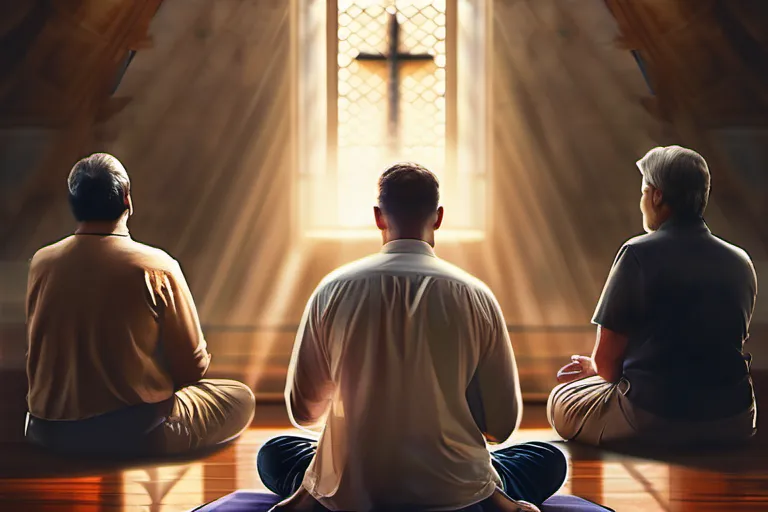
Jehovah’s Witnesses worship Jehovah as the one Almighty God, regard Jesus as God’s Son and Savior, and reject the Trinity. They base their teaching on their interpretation of the Bible and place particular emphasis on God’s Kingdom, public preaching and Christian conduct. This introduction identifies the organization’s stated beliefs; it does not assume that other Christian traditions share its interpretations.
What do they teach about God and Jesus?
The official summary of Jehovah’s Witness beliefs distinguishes Jehovah from Jesus. They understand Jesus as God’s Son rather than Almighty God and describe the holy spirit as God’s active force rather than a person of the Trinity.
They identify as Christians because they follow Jesus. Catholic, Orthodox and most Protestant churches affirm a trinitarian understanding, so the label “Christian” does not establish agreement about God’s nature. Our comparison of religious understandings of God provides a wider context.
The Bible and religious authority
Jehovah’s Witnesses accept the 66 books of the Bible used in the Protestant canon. Their interpretation should be distinguished from the claim that a passage has only one uncontested meaning. They use the New World Translation and publish explanations of scripture through their organization.
Their description of the Governing Body identifies a central group that provides direction for the worldwide community. It is misleading to portray their teaching as simply a collection of unrelated personal interpretations.
God’s Kingdom, resurrection and the 144,000
The movement teaches that God’s Kingdom is a heavenly government under Jesus. Its understanding of future life includes both a heavenly group and people living on a restored earth.
The official answer to who goes to heaven interprets the biblical number 144,000 as those who rule with Christ. This is not the same as saying that only 144,000 people can receive salvation. The organization also teaches hope of everlasting life on earth.
What happens at a Kingdom Hall?
Kingdom Halls are congregation meeting places. According to the organization’s meeting information, meetings include Bible teaching and discussion and are open to the public. Songs and prayers form part of worship.
Public preaching, including conversations and distribution of religious material, is another recognizable practice. Individual work schedules, family routines and experiences vary; there is no basis for inventing a universal pre-dawn timetable or claiming that every member experiences community life in the same way.
Politics and celebrations
The movement’s teaching on political neutrality explains its position of remaining separate from political sides. This should be described as its religious position rather than as an absence of concern about other people.
Jehovah’s Witnesses also do not celebrate birthdays. Their official explanation sets out the interpretation and principles behind that practice. Other Christians interpret these matters differently.
What is their current position on blood?
As checked on 1 November 2026, a blanket statement that Witnesses reject every transfusion of blood components is outdated. In an official announcement dated 18 September 2026, the organization said that accepting donor red cells, white cells, plasma or platelets is an individual conscience decision. It stated that its rejection of whole-blood transfusion remained unchanged.
This describes a religious policy, not the medical safety or suitability of a treatment. A person’s actual wishes must not be inferred solely from their religious label. Clinical decisions belong in discussion with qualified healthcare professionals and the individual concerned.
How to use the sources
The linked JW.org pages are primary sources for the organization’s own position. They do not independently establish whether its interpretation is correct or represent every current or former member’s experience. For a specific question, distinguish a biblical passage, the organization’s interpretation and the practical policy in effect at the time.
Baptism and the annual Memorial
The organization’s explanation of baptism describes complete immersion in water as the public expression of a personal dedication to God. It rejects infant baptism on the grounds that the candidate must understand the teaching, repent and make that dedication. This explains why attending meetings or growing up in a Witness family is different from making a baptismal commitment.
Another distinctive observance is the annual Memorial of Jesus’ death, also called the Lord’s Evening Meal. The official explanation of the Memorial describes unleavened bread and red wine as symbols of Jesus’ body and blood. Most attendees observe without eating or drinking them; the organization connects partaking with its teaching about those called to rule with Christ in heaven.
These practices help explain why familiar Christian terms do not always indicate the same ritual or theology. The Witness interpretation of baptism and the Memorial should be described as that tradition’s position rather than treated as a definition binding on every church.
Conclusion
Jehovah’s Witness beliefs connect their understanding of Jehovah, Jesus and God’s Kingdom with Bible study, preaching and congregational life. Their Christian self-identification does not remove significant disagreements with trinitarian churches. The annual Memorial and baptism further show how their interpretations shape worship and commitment. When a practical policy changes, its dated official statement matters; neither a familiar stereotype nor a religious label can establish every individual’s beliefs or decisions.
Reviewed and substantially revised on 1 November 2026. Current policy dates are stated where relevant. See our editorial approach and AI transparency.
Published by Ralf. About our editorial process.




1 thought on “What Do Jehovah’s Witnesses Believe? Teachings and Practices”