
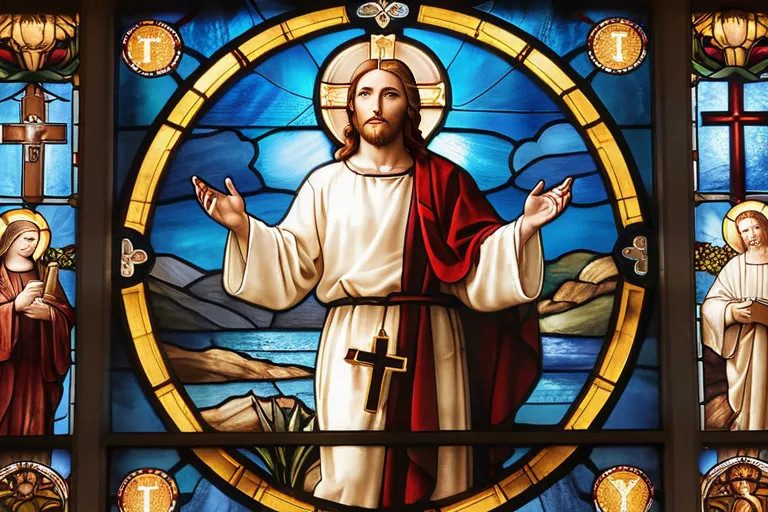
For Christians, Jesus is central to the understanding of God, salvation, worship and the life of discipleship. The New Testament presents him as teacher, Messiah, Son of God, crucified saviour and risen Lord. Christian traditions explain the relationship among these claims through scripture, creeds, preaching and worship.
The Nicene understanding of Jesus is shared across Catholic, Orthodox and many Protestant churches. Other communities that identify as Christian understand his identity differently. A useful introduction therefore distinguishes the broad creedal tradition, particular churches’ teachings and the biblical passages through which these beliefs are expressed.
Jesus in the Gospel Narratives
The four canonical Gospels are the principal Christian narratives of Jesus’ life, ministry, death and resurrection. Each has its own presentation and emphasis.
Matthew 1–2 places Jesus within the lineage of Abraham and David and tells of Joseph, the visiting wise men, Herod and the flight to Egypt. Luke 2:1–20 tells of the birth in Bethlehem, a manger, angels and shepherds. These are distinct narrative accounts, even though Christmas traditions often bring their images together.
John opens with a different theological perspective. John 1:1–18 speaks of the Word’s relation to God and the Word becoming flesh. This passage is fundamental to Christian reflection on Jesus’ divine identity and incarnation.
Reading the narratives attentively helps explain the beliefs that Christians draw from them. Their details acquire meaning within each Gospel’s larger account.
Messiah, Christ, Son of God and Lord
“Christ” is a title corresponding to “Messiah,” the anointed one. Christians understand Jesus’ mission in relation to Israel’s scriptures and hopes, while interpreting his suffering and resurrection as central to that mission.
Mark 8:27–35 places Peter’s identification of Jesus as the Christ alongside Jesus’ announcement of suffering, death and resurrection. Peter’s resistance then becomes part of the story. Recognition of a title does not mean the disciple already understands what it entails.
“Son of God” and “Lord” also carry theological significance. In Nicene Christianity, the Son’s relationship to the Father belongs to the understanding of God’s eternal life. These titles are connected with worship and salvation, rather than simply being compliments paid to an admired teacher.
The Nicene Creed and Jesus’ Divinity
The Nicene-Constantinopolitan Creed, published by the World Council of Churches, confesses one Lord Jesus Christ, eternally begotten of the Father and of one being with the Father. It connects this confession with incarnation, crucifixion, resurrection, ascension and future judgment.
The creed of 381 expands the creed agreed at Nicaea in 325. Its language distinguishes the Son’s eternal relation to the Father from the creation of the world. Within this account, the Son is fully divine.
Trinitarian Christianity understands Father, Son and Holy Spirit as distinct persons within the one divine being. This provides the doctrinal setting for Christian prayer to Jesus and for statements about his relation to the Father.
Incarnation: Truly Divine and Truly Human
The incarnation is the belief that the eternal Son assumed human nature. The Catholic Catechism’s account, especially paragraphs 461–469, describes Jesus as truly God and truly human, one person whose humanity is real.
This understanding gives significance to both his divine identity and his embodied life. Birth, suffering and death belong to the account of salvation because the Son is understood to have entered human existence.
The Council of Chalcedon’s language of 451 describes one Christ in two natures, divine and human, without confusion or separation. The formula seeks to hold together unity of person and the integrity of both natures. Historical disagreements about such language require attention to the churches involved.
For example, the 1973 common declaration by Pope Paul VI and Coptic Pope Shenouda III jointly confesses Christ’s complete divinity and complete humanity in a real union. This provides a concrete example of churches clarifying shared belief while continuing to address differences.
The Kingdom of God and Discipleship
Jesus’ proclamation concerns the kingdom of God. Mark 1:15 links the nearness of God’s kingdom with repentance and belief in the good news.
Discipleship involves a response to that proclamation. In the passage from Mark 8, following Jesus is connected with self-denial and taking up the cross. The narrative joins questions of identity with questions about how followers live.
The Gospels’ teaching passages and stories develop this relationship through mercy, forgiveness, generosity and trust in God. Christian interpretation asks how such teaching shapes a community’s life, as well as how individuals understand Jesus.
Two Parables That Make the Teaching Concrete
In Luke 10:25–37, the good Samaritan story follows a question about who counts as a neighbour. The Samaritan cares for an injured traveller, takes him to an inn and arranges further care. The closing question directs attention to the person who acts with mercy.
The practical details matter. Compassion becomes treatment of wounds, transport and expenditure. This gives the command to love a neighbour a recognizable form of action.
Luke 15:11–32, often called the parable of the prodigal son, includes both the returning younger son and the angry elder brother. The father welcomes the one who returns and goes out to address the one who refuses the celebration.
The ending leaves readers with the elder brother’s response still unresolved. Christian reflection on repentance and mercy therefore includes the difficulty of rejoicing in another person’s restoration.
The Cross and the Meaning of Salvation
Christian belief connects Jesus’ death with the problem of sin and humanity’s relationship with God. In 1 Corinthians 15:3–4, Paul summarizes the message he received: Christ died for sins, was buried and was raised.
Churches develop accounts of salvation through their interpretation of such passages. Forgiveness, reconciliation, deliverance from sin and death, and transformed life are important themes, with different emphases in different traditions.
As one Protestant example, the Assemblies of God’s Statement of Fundamental Truths describes salvation through repentance and faith in Jesus Christ, and justification by grace through faith. This is a particular church fellowship’s formulation of how people receive salvation.
The cross also shapes discipleship and worship. Christians connect the one they follow with self-giving love and the suffering narrated in the Gospels.
Resurrection: The Centre of Easter Faith
Paul’s argument in 1 Corinthians 15 shows why resurrection is central: he links the truth of Christian preaching and hope for the dead with Christ’s being raised. He also passes on accounts of appearances to Cephas, the Twelve and others.
Christian teaching understands this as more than an inspiring memory of Jesus. The Orthodox Church in America’s account of resurrection affirms both real death and actual resurrection while describing a transformed, glorified humanity.
The Catholic Catechism likewise distinguishes resurrection from a return to ordinary mortal life in paragraphs 645–646. These teachings connect continuity with the crucified Jesus and a new condition of life.
The Gospel narrative in Luke 24:36–49 portrays the risen Jesus addressing frightened disciples, showing his hands and feet and eating before them. Christian accounts of Easter interpret these narratives as witness to the risen Lord.
Jesus in Communion and Worship
The meal before Jesus’ death provides a central reference for Eucharist, Communion or the Lord’s Supper. Mark 14:22–25 connects bread and the cup with Jesus’ body, blood and covenant.
Churches differ in explaining what takes place in Communion. The Catholic Catechism, paragraph 1374, teaches Christ’s true, real and substantial presence. The Assemblies of God statement describes the meal as a symbol of participation in Christ, a memorial of his suffering and death, and a proclamation of his coming.
These examples show why Communion cannot be explained through one account of symbolism alone. In each case, the community understands the practice through its teaching about Jesus and the purpose of worship.
Christian Diversity and Other Religious Understandings
The Nicene account is influential across major Christian traditions, but it does not describe every community that identifies as Christian. Jehovah’s Witnesses’ own explanation distinguishes Jesus from Almighty God and describes him as God’s firstborn creation. This differs substantially from the creed’s understanding of the eternally begotten, uncreated Son.
Jesus also has an important place in Islam. Qur’an 4:171 identifies Jesus, son of Mary, as God’s messenger while rejecting Trinitarian language. Respect for Jesus therefore does not by itself imply agreement about his identity.
Understanding these differences makes comparison more precise. It allows each community’s claims to be considered in their own terms.
Teaching and Devotion in Cultural Life
Specific examples help explain Jesus’ influence beyond a statement that he changed all of culture. The Met’s Crucifixion panel by Segna di Buonaventura, around 1315, formed part of a diptych used for private devotion. The museum explains how its imagery offered material for meditation.
In another setting, Martin Luther King Jr.’s early sermon outline “Loving Your Enemies,” tentatively dated 1952, engages Jesus’ teaching in Matthew 5. King treats love of enemies as a demanding response to destructive cycles of hostility.
These examples identify particular uses of Gospel subjects: an image made for devotional attention and a sermon applying a teaching to human relationships. They show interpretation at work through identifiable objects and texts.
Conclusion
Christian belief about Jesus joins claims about his identity with an account of salvation and a way of life. The incarnation, cross and resurrection explain why the creedal tradition worships him as divine saviour, while the Gospels’ teachings give discipleship its practical demands.
Reading the good Samaritan’s actions, Paul’s resurrection argument or a church’s account of Communion reveals how these beliefs take shape. Attention to scripture and to particular traditions makes both shared convictions and significant differences easier to understand.
Published by Ralf. About our editorial process.




3 thoughts on “What Christians Believe About Jesus: Identity, Salvation and Discipleship”