
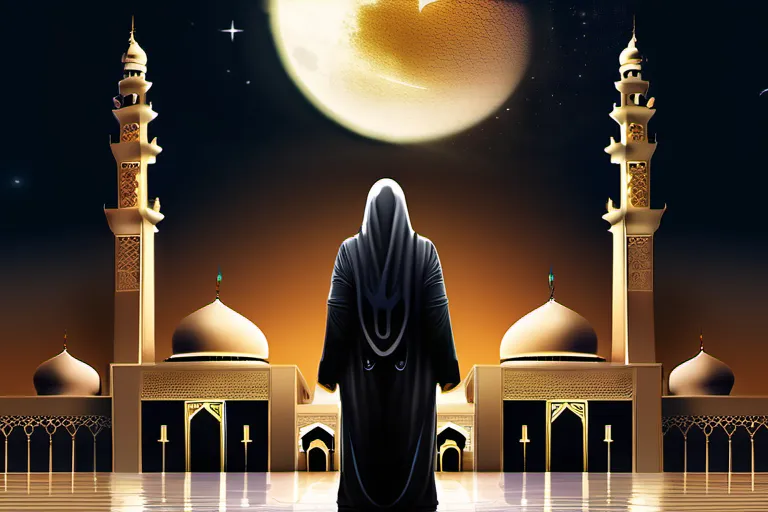
Satan in Islam is associated with temptation, deception and opposition to God’s guidance. Iblis is the named figure whose refusal to obey God’s command concerning Adam provides a central narrative about pride and rebellion.
The subject includes Quranic passages, hadith, theological interpretation and later literature. Understanding those sources clarifies what Muslims mean by temptation and responsibility, while preventing an invented physical portrait or literary quotation from being mistaken for scripture.
Iblis and Shaytan: related terms
In Whitney Bodman’s study for the St Andrews Encyclopaedia of Theology, Iblis is a proper name, while Shaytan can be understood as a designation associated with the adversary. Outside the Quran, the terms are often used interchangeably.
The distinction is useful because a reference to satanic temptation is not always another episode in a detailed biography of Iblis. Religious discourse can discuss a named figure, a role and a form of opposition.
Bodman also traces how later traditions developed the Quranic narrative in different directions. Those developments belong to the history of interpretation; they should not all be treated as details explicitly supplied by a single Quranic passage.
Is Iblis an angel or a jinn?
Quran 18:50 identifies Iblis as one of the jinn and describes his disobedience. Earlier and later interpreters have nevertheless debated how to relate his presence among the angels to that identification.
Bodman’s account examines this theological disagreement, including its implications for whether angels can disobey. Describing Iblis simply as a fallen angel without acknowledging the Quranic wording leaves out an important part of the subject.
Jinn should not automatically be equated with evil spirits in every instance. Egypt’s Dar al-Ifta explains jinn within its religious teaching as beings with moral choice, distinguishing good and evil among them.
This is a confessional account of unseen beings, rather than a scientific classification. Its internal distinction is still essential for understanding the belief accurately.
The refusal concerning Adam: pride rather than ignorance
In Quran 7:12, Iblis claims superiority because he was created from fire and Adam from clay. The contrast turns an account of origin into a justification for disobedience.
The ethical issue is arrogance: claiming higher status instead of accepting the command. A separate hadith helps make that concept concrete. In Sahih Muslim 91a, pride is explained through rejection of truth and contempt for people.
The report distinguishes that attitude from a person’s wish to have good clothing and shoes. Its example gives pride a more precise meaning than treating every form of confidence or appreciation of beauty as the same fault.
Read together, the sources invite reflection on how people justify their treatment of others. The comparison concerns an ethical pattern; it is not a claim that every disagreement or display of confidence is an appearance of Iblis.
Temptation does not remove human responsibility
Quran 14:22 presents Satan acknowledging that he invited people and they responded. He denies power to rescue them and redirects blame toward their own choices.
The passage limits the excuse that wrongdoing can simply be transferred to an external tempter. Within this religious framework, temptation and accountability belong together.
Satan is therefore not a second god equal to Allah. Opposition to divine guidance does not place the adversary outside the created order or give him an independent sovereignty matching God’s.
Whispering and the examination of motives
Quran 114:4 describes the evil of a retreating whisperer. This language is important in Muslim discussions of subtle temptation.
The Yaqeen Institute essay Devil in the Details, by Zohair Abdul-Rahman and an anonymous coauthor, offers a contemporary religious analysis of intentions. Its examples distinguish sincere advice from condemnation, gratitude from boasting, and reliance on God from laziness.
The significance lies in the possibility that an apparently good purpose can become entangled with a desire for status or superiority. An action’s outward form does not fully explain the intention with which someone performs it.
The essay represents a particular Muslim ethical and spiritual interpretation. Its vocabulary should be understood within that framework, rather than used as a diagnosis of what causes another person’s thoughts or behavior.
Seeking refuge and maintaining perspective
Quran 16:98 instructs the reader to seek God’s protection from Satan when reciting the Quran. Seeking refuge expresses dependence on God within religious practice.
It does not follow that every ordinary difficulty proves an unseen attack. In a 2013 response, Dar al-Ifta specifically discourages attributing everything that happens to magic or jinn. It urges consideration of evidence and the relevant causes in individual situations.
The response maintains the institution’s religious beliefs while rejecting indiscriminate supernatural explanation. Those two elements should be represented together.
This distinction matters when discussing everyday life. Hunger, distraction, disagreement or reluctance do not become verified interventions by Iblis simply because a writer can imagine him causing them.
Later literature uses Iblis in different ways
Iblis also appears in literary and visual interpretations. The Morgan Library and Museum describes a sixteenth-century Turkish manuscript scene in which Iblis leads Umar to a mosque containing a man praying and another sleeping.
The manuscript concerns the life and miracles of Rumi and derives from a translation of an abridged version of Aflaki’s fourteenth-century Persian account. The museum interprets the scene through the power of divine love.
This gives a specific, identifiable example of later storytelling about Iblis. It is different from presenting a newly invented sentence as a direct quotation from Rumi, or assuming that a literary scene is a Quranic episode.
Artistic representation is not a fixed scriptural portrait
The Metropolitan Museum’s Illustrated Manuscript, dated 1412 and attributed to Shiraz, includes discussion of the fall of Iblis alongside religious instruction. The museum notes uncertainty about the work’s title and suggests the illustrations may be later than the manuscript’s stated date.
The object demonstrates how a subject can be transmitted through a particular text and artistic setting. Its details require attention to date, attribution and interpretation.
A manuscript image should not automatically be used to claim that the Quran specifies Iblis’s height, wings, clothing or facial appearance. An artist’s representation and a scriptural description are different sources.
Conclusion
Iblis’s role in Islamic teaching is closely connected with arrogance, disobedience and temptation. Quranic passages about his refusal and the limits of Satan’s influence place human responsibility at the center of the discussion.
Hadith, religious ethical writing and later manuscripts add different perspectives. Keeping them identifiable allows the subject’s theological and cultural depth to emerge without invented quotations, a universal physical portrait or unsupported claims that every difficulty has a satanic cause.
Published by Ralf. About our editorial process.



