
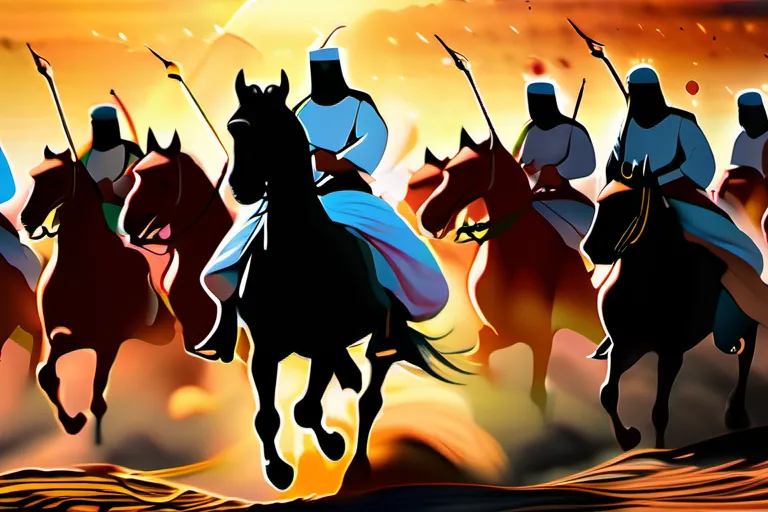
Karbala is central to Shia Muslim memory because Husayn ibn Ali, a grandson of the Prophet Muhammad, was killed there with his companions in 680 CE. The event is remembered especially on Ashura, the tenth day of Muharram. Its significance joins the history of leadership disputes to religious reflection on loyalty, suffering and resistance to injustice.
What happened at Karbala?
The Institute of Ismaili Studies identifies Karbala as an Iraqi city and the place of Husayn’s martyrdom in 61 AH, corresponding to 680 CE. His shrine makes the city an important destination for devotional visitation.
Husayn’s relationship to Muhammad helps explain why the loss is remembered as a tragedy involving the Prophet’s family, rather than simply as one military encounter among many. The names Husayn, Hussein and Husain are different English transliterations.
Why was there a conflict?
Mahmoud M. Ayoub’s study of Ashura places the confrontation after Yazid succeeded his father Muawiya as caliph. Husayn opposed Yazid’s authority and responded to appeals from supporters in Kufa. His party was intercepted at Karbala by forces acting under the governor of Kufa.
Husayn and his male supporters were killed; surviving women and children were taken captive. Exact battle numbers and dramatic dialogue require careful treatment of particular historical sources. Reconstructing the event should not rely on invented speeches or imagined private thoughts.
Why does it matter religiously?
Ayoub describes Husayn’s death as an enduring example of sacrifice against oppression, with significance extending beyond Shia communities. Within Shia devotion, mourning connects the believer to Husayn and the suffering of the Prophet’s family.
Describing him as a model of moral courage reports that religious interpretation. It does not require treating every detail of a later devotional retelling as independently established historical evidence. Both the event and the ways communities remember it deserve attention.
What are Ashura and Arbaeen?
Ashura is the tenth of Muharram, the date associated with Husayn’s death. Saleem Bhimji’s Shia account of Arbaeen explains the later commemoration as marking forty days after the tragedy. Its devotional setting includes visitation and reflection on Husayn’s example.
The two observances are related but are not interchangeable names for the same day. Because the Islamic calendar is lunar, their dates in a Gregorian calendar change from year to year.
How is Karbala remembered?
Mourning gatherings can include recounting the tragedy, reflection and elegies, as Ayoub’s historical account explains. The IIS also describes visitation to Husayn’s tomb and the use of Karbala soil in prayer tablets by some Shia, particularly Twelver communities.
These examples should not be turned into a rule that every Shia Muslim observes an identical ritual. A particular procession, poem or local custom needs to be identified in its own setting.
What should an introductory explanation keep distinct?
Karbala is a place, the battle is a historical event, and Ashura and Arbaeen are commemorations associated with it. Their religious meanings have been expressed through many communities and generations. Keeping those distinctions clear explains the event’s importance more accurately than reducing it either to warfare alone or to a single universal ceremony.
How did a battlefield become a shrine city?
Meir Litvak’s history of Karbala places the city southwest of Baghdad and traces the development of visitation to Husayn’s grave after his death. Over time, a shrine, accommodation, schools and burial grounds helped make the place a center of religious life.
That development was not uninterrupted. Litvak describes the destruction of the tomb and restrictions on visitation under the Abbasid caliph al-Mutawakkil in the ninth century, followed by rebuilding. Later rulers and benefactors contributed to the shrine and the city. Karbala’s importance therefore includes a history of institutions and communities as well as the memory of the battle.
What does visitation mean for devotees?
Ziyara means visitation. In the Arbaeen account published by Saleem Bhimji, a visit to Husayn’s grave expresses attachment to his example and to the Prophet’s family. The account recalls Jabir ibn Abdullah as an early visitor and includes a visitation text through which devotees address and remember Husayn.
The author also notes disagreement about the dating of early Arbaeen events. That distinction is valuable: a devotional narrative can explain how a community understands its practice without settling every historical detail about its beginnings. The religious meaning of remembering loyalty and sacrifice should be described as the community’s interpretation.
Why is Karbala soil used in some prayers?
Some Twelver Shia use a small clay tablet, or turbah, as the surface on which the forehead rests during prostration. Ayatollah Ali al-Sistani’s published rulings explain a broader rule about suitable surfaces: earth and certain things that grow from it, with further qualifications. They give special preference to the turbah associated with Husayn.
Two distinctions matter. First, preference for Karbala soil does not mean that no other material can be used. Second, prostrating on a material is different from worshipping that material. The same rulings explicitly reserve prostration as worship for Allah. Describing the object without explaining that distinction can misrepresent the practice.
How do art and performance carry the memory?
Religious memory can be transmitted through poetry, recitation and performance as well as through visits to a place. One example is Iranian ta‘ziye, a ritual dramatic tradition. The UNESCO announcement published by Lithuania’s permanent delegation describes it as an art involving religious events, historical or mythical stories and folk narratives, with particular subjects, costumes and music.
A performance is therefore a form of remembrance and interpretation, rather than an unedited eyewitness record. Identifying the particular dramatic tradition also avoids suggesting that every Shia community uses the same artistic form. Local expression and a shared attachment to Husayn can coexist.
Conclusion
Karbala matters because a historical death became a lasting reference point for devotion, moral reflection and communal memory. Ashura, Arbaeen, shrine visitation and particular prayer or artistic practices express that importance in different ways. A fuller understanding keeps the event, the development of its commemorations and the meanings believers give them connected, while distinguishing the evidence for each.
Reviewed and substantially revised on 1 November 2026. Historical analysis and Shia devotional interpretation are attributed separately. See our editorial approach and AI transparency.
Published by Ralf. About our editorial process.



