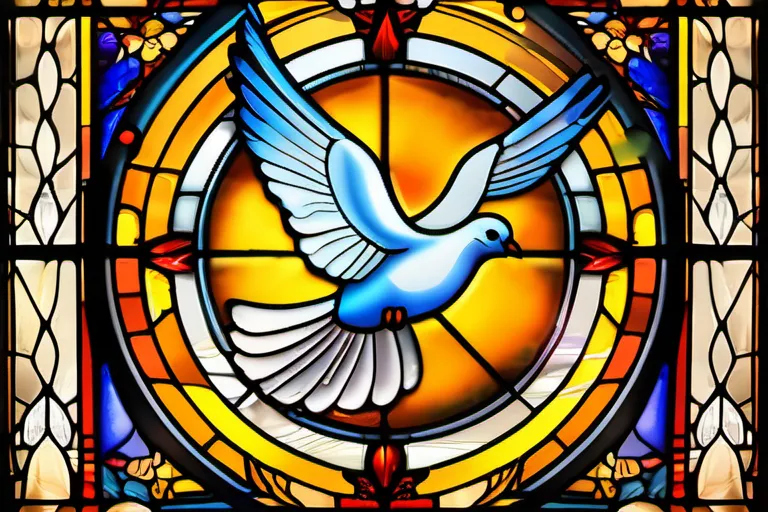
In Nicene, trinitarian Christianity, the Holy Spirit is a divine person, worshipped with the Father and the Son as the one God. Christians associate the Spirit with life, revelation, the renewal of believers, prayer, and gifts that serve the Church. The Spirit is not simply a name for religious excitement, an impersonal energy, or a technique for accessing supernatural power.
Christian traditions share substantial teaching about the Spirit while differing over some theological formulations and the meaning of particular experiences. Understanding the subject requires distinguishing the Spirit’s divine identity, biblical accounts of the Spirit’s work, and the ways different churches explain gifts, baptism, and growth in Christian life.
The Holy Spirit within the Trinity
The Nicene Creed as printed by the USCCB identifies the Holy Spirit as Lord and giver of life, worshipped and glorified with the Father and the Son. This places the Spirit within the Christian confession of God, rather than among created assistants or lesser spiritual beings.
The Orthodox Church in America’s explanation of the creed explicitly describes the Spirit as eternal, uncreated, and divine. On that account, there was no time when the Spirit did not exist. Biblical stories about the Spirit’s activity therefore are not accounts of the Spirit first being created.
“Person” in this teaching does not mean one independent god alongside two others. Father, Son, and Spirit are distinguished without dividing God into three parts. Nor does calling the Spirit the third person make the Spirit third in divine worth. The language expresses a distinction within the confession of one God.
What does it mean that the Spirit “proceeds”?
The creed’s language of procession concerns the Spirit’s eternal relationship within God. It should be distinguished from biblical accounts of the Spirit being sent to people at a particular moment.
The Catholic form printed by the USCCB says that the Spirit proceeds from the Father and the Son. The Orthodox form explained by the OCA says that the Spirit proceeds from the Father. The Western addition is commonly called the filioque, meaning “and the Son.” These are identifiable differences in creedal wording and theological explanation.
A brief introduction cannot settle that historical debate. It can clarify what is being discussed: neither formulation means that the Spirit began to exist at Pentecost or that the Father created the Spirit as a tool. Confusing eternal relationship with a mission within history makes the disagreement harder to understand.
The Spirit as teacher and helper in John
In John 14:15–27, Jesus promises the disciples another helper, called the Comforter in the King James Version, identified as the Spirit of truth. Verse 26 connects the Holy Spirit’s work with teaching and bringing Jesus’s words to their remembrance.
The context matters. The promise concerns the disciples’ relationship with Jesus and the continuation of his teaching. “Comforter” should not be reduced to a guarantee of pleasant feelings. The passage links divine help with truth, remembrance, love, and keeping Jesus’s commandments.
For Christian interpretation, guidance by the Spirit therefore has a relationship to Christ’s teaching. An intense impression or convenient answer does not become authoritative merely because a person labels it spiritual. The wider New Testament also includes instructions to examine spiritual claims.
Pentecost: empowerment, not the Spirit’s beginning
Acts 2:1–13 describes the disciples gathered at Pentecost, a sound like a strong wind, appearances like tongues of fire, and speaking in other languages through the Spirit. The hearers recognize speech in their own languages, creating both amazement and questions.
The comparisons with wind and fire communicate the character of the scene; they do not define the Holy Spirit as a physical substance made of air or flame. Within Christian teaching, Pentecost is a manifestation of the Spirit’s work among the gathered followers of Jesus.
The passage connects the gift with public witness across linguistic differences. It should not automatically be treated as a complete description of every later experience called “speaking in tongues.” Churches interpret such experiences in relation to Acts, Paul’s letters, and their wider understanding of spiritual gifts.
Prayer, belonging, and transformation
Romans 8:14–17 connects the Spirit with adoption as God’s children and with addressing God as Father. The passage describes belonging and inheritance, while also speaking of suffering with Christ. The Spirit’s presence is not presented as proof that a believer will encounter no hardship.
Later in the chapter, verses 26–27 describe the Spirit helping in weakness and interceding when believers do not know how to pray. This gives a different picture from a method that works only when someone can produce exactly the right words or a sufficiently intense emotional state.
Christian accounts of sanctification connect the Spirit with the formation of character over time. The Southern Baptist Baptist Faith and Message, article IV, for example, describes growth toward moral and spiritual maturity through the Spirit’s presence and power. That is a theological account of continuing growth, rather than a claim that every believer immediately becomes consistently patient or wise.
Spiritual gifts are for service
First Corinthians 12:4–13 describes different gifts associated with the same Spirit. Its examples include wisdom, knowledge, faith, healing, prophecy, discernment, tongues, and interpretation of tongues. Interpretation of tongues is not the same expression as interpretation of dreams.
Paul connects the manifestation of the Spirit with the common benefit and says that the Spirit distributes gifts as the Spirit wills. Gifts are therefore not presented as private trophies proving that their recipient is more valuable than other people. Nor does this account imply that every believer must possess every gift.
A church may value training, experience, and responsible service. But a spiritual gift cannot simply be equated with a skill that anyone is guaranteed to acquire through sufficient practice. The scriptural account concerns divine giving and a community’s needs, rather than a universal technique for producing prophecy or healing.
Gifts, fruit, and the Catholic sevenfold list
The “fruit of the Spirit” is a related but different expression. Galatians 5:22–25 names qualities including love, joy, peace, patience, gentleness, and self-control. These concern the character of a life shaped by the Spirit, rather than a list of extraordinary abilities.
Catholic teaching also has a traditional list of seven gifts: wisdom, understanding, counsel, fortitude, knowledge, piety, and fear of the Lord. The Catechism, paragraphs 1830–1832, explains these as dispositions supporting responsiveness to God and also discusses the fruits.
These different lists answer different questions. The sevenfold Catholic account is not an attempt to reproduce Paul’s list of charisms in 1 Corinthians 12. A comparison becomes clearer once formation of character, dispositions, and gifts for particular kinds of service are distinguished.
Why churches explain “baptism in the Spirit” differently
First Corinthians 12:13 connects the one Spirit with incorporation into one body. Churches differ over how this and other passages relate to conversion, water baptism, and subsequent experiences.
The Southern Baptist statement, article II.C, says that at regeneration the Spirit baptizes every believer into Christ’s body. The Assemblies of God’s statements 7–8, by contrast, describe baptism in the Holy Spirit as distinct from and subsequent to new birth, associated with empowerment for service and speaking in tongues as initial physical evidence.
Catholic sacramental teaching connects entry into life in the Spirit with baptism through water. Catechism 1213 describes baptism as regeneration and incorporation into Christ and the Church. It is not simply another name for the later emotional experience described in some Pentecostal accounts.
These are particular institutional explanations, not interchangeable descriptions accepted by every Christian. The same phrase can carry different meanings, so an account of “Spirit baptism” should identify the tradition involved. One church’s requirement concerning tongues cannot simply be imposed as a test of every Christian’s spiritual life.
The New Testament also speaks of being filled with the Spirit: Ephesians 5:18–21 connects this with worship, thanksgiving, and relationships within the community. Distinguishing that language from a particular doctrine of initiation prevents every reference to the Spirit from being collapsed into one kind of event.
Discernment and accountability
First John 4:1–3 calls for testing spiritual claims and connects its test with confession of Jesus Christ come in the flesh. The passage does not assume that every religious voice speaks with divine authority.
First Corinthians 14:26–33 similarly discusses interpretation, orderly speech, and evaluation of prophetic claims. It places spiritual expression within a community’s responsibilities. A speaker’s claim to inspiration does not remove the need for examination.
A practical example is a person claiming divine direction for a decision affecting others. The claim itself does not settle whether the proposal is truthful, consistent with Christian teaching, or responsibly considered. The New Testament’s own emphasis on discernment complicates the idea that certainty or intensity makes further questions improper.
Conclusion
The Holy Spirit, in trinitarian Christianity, is God’s divine and personal presence, eternally distinguished from the Father and the Son while belonging to the one God. Biblical accounts connect the Spirit with teaching, belonging, prayer, transformation, and gifts for service.
Careful understanding preserves the differences between divine identity, spiritual gifts, the fruit of character, and a church’s account of baptism or filling. It also keeps discernment within the picture: claims about the Spirit are interpreted through Scripture, communal teaching, and accountable conduct, rather than treated as self-validating expressions of feeling.
Published by Ralf. About our editorial process.