
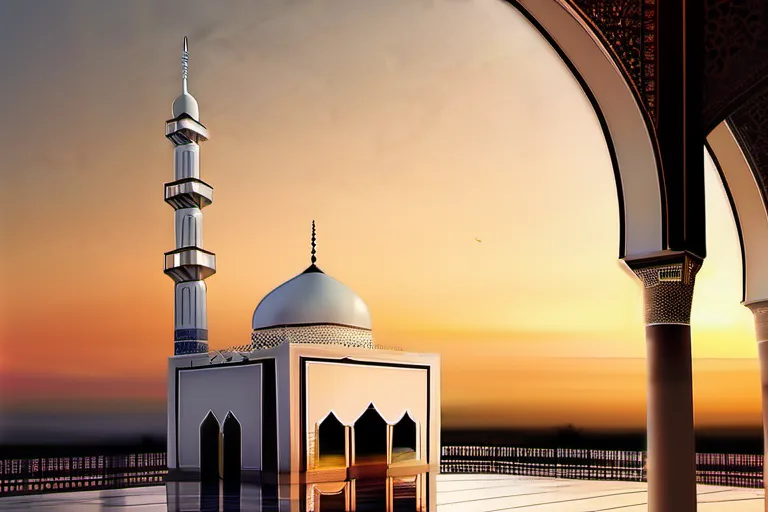
 Salah is formal Muslim prayer, one of the Five Pillars of Islam. It gives the day a sequence of times for worship and brings Qur’anic recitation together with movements such as bowing and prostration. The five daily prayers have names and recognizable parts. Their timing, some details of their performance and the arrangements for communal prayer can vary by tradition and circumstance. Sahih Muslim 8a
The five daily prayers and their times
Fajr is the dawn prayer, offered before sunrise. Dhuhr follows the sun’s passage through its highest point, and Asr is the afternoon prayer. Maghrib comes after sunset, and Isha is the night prayer. A report in Sahih Muslim describes the times in relation to dawn, the sun’s movement, the length of shadows and the end of twilight. These reference points explain why a timetable for the same mosque can show different times in summer and winter. Sahih Muslim 612d
Some traditions allow the five prayers to be offered on fewer than five separate occasions in the day. The Twelver Shi‘i jurist Ali al-Sistani describes a time span shared by Dhuhr and Asr, with Dhuhr performed first, and also gives rules for the order of Maghrib and Isha. Both prayers in each pair retain their own identity. A report attributed to Ibn Abbas in Sahih Muslim likewise describes Muhammad performing those pairs together in Medina. The report and the legal manual are distinct sources for understanding why the number of prayers and the number of occasions on which they are performed can differ. Al-Sistani, Rules of Prayer, Issue 60 · Sahih Muslim 705d
Preparation and direction
Qur’an 5:6 gives instructions for washing before prayer, including attention to the face, arms, head and feet. It also addresses circumstances in which water is unavailable. The preparation with water is commonly called wudu, and the direction faced in prayer is called the qibla. Qur’an 2:144 directs worshippers toward the Sacred Mosque in Mecca. The qibla gives worshippers in different places a common point of orientation, so the direction they face depends on where they are. Qur’an 5:6 · Qur’an 2:144
Recitation, bowing and prostration
A repeated unit of prayer is called a rak‘ah. An instructional report in Sahih al-Bukhari describes the opening takbir, the declaration of God’s greatness, followed by Qur’anic recitation while standing. It then describes bowing, rising upright, prostrating and sitting. The report repeatedly emphasizes settling into the postures. A nearby report names Al-Fatihah, the opening chapter of the Qur’an, in connection with recitation. The chapter turns from praise of God to a request for guidance. Sahih al-Bukhari 757 · Sahih al-Bukhari 756 · Qur’an 1
Friday and Eid gatherings
Friday communal prayer is known as Jumu‘ah. Qur’an 62:9–10 tells believers to put trade aside at the call to prayer and describes people dispersing after prayer to seek God’s bounty. The special prayers for Eid al-Fitr and Eid al-Adha belong to the festival calendar. A report in Sahih Muslim describes Ibn Abbas instructing Ibn al-Zubayr to omit the ordinary call to prayer on Eid al-Fitr and to deliver the sermon after the prayer. The sources describe distinct occasions, each with its own pattern. Qur’an 62:9–10 · Sahih Muslim 886b
Conclusion
The structure of salah is visible in its timing, orientation, recitation and movements. These features help explain what someone sees when a worshipper faces Mecca, stands to recite and moves into a bow or prostration. Friday and Eid gatherings place prayer in a communal calendar, while the daily prayers organize worship around the changing light of an ordinary day.
Published by Ralf. About our editorial process.



