
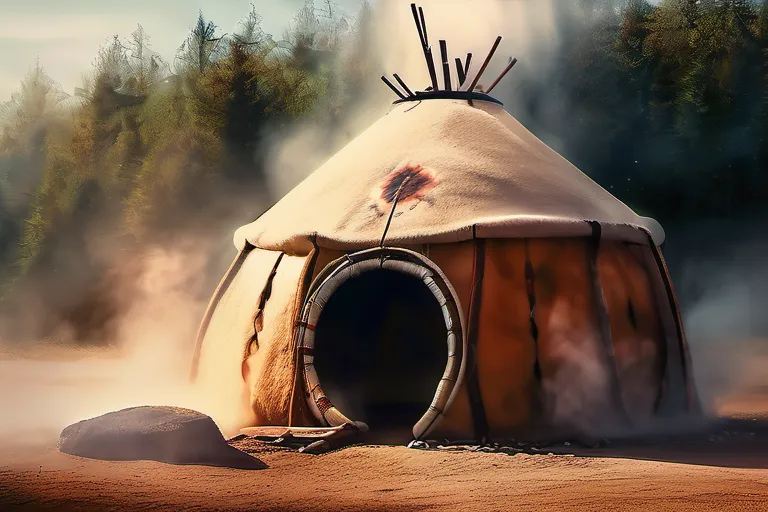

A sweat lodge is a place used for prayer and purification in several Indigenous traditions. The same English term can refer to a structure or to what takes place there. In Lakota contexts the ceremony is often called inípi. Its meaning comes from the prayers, relationships and responsibilities of the people who carry it on. Public accounts by Lakota participants and ceremonial leaders describe those responsibilities and explain why they have objected to outsiders selling events under the same name. Native Voices photograph of Lakota spiritual leader Michael Hackwith Arvol Looking Horse’s 2003 proclamation Looking Horse’s response to the Sedona deaths
What purification can mean to a participant
Rita Means recalled in Tribal College Journal that her paternal grandfather had a sweat lodge and took part in the Sun Dance near Wambli, South Dakota. Her maternal grandmother was Episcopalian, and Means went to a Catholic school. She described growing up with those different religious influences. She turned to Lakota spirituality as an adult after her daughter died and wrote that taking part in a sweat lodge led her to reconsider her relationship with other people and with the living world. Rita Means’s account in Tribal College Journal
Means wrote about a particular experience of grief and about what she learned from returning to a practice present in her own family. Her account gives a sense of what spiritual healing meant in that setting. It concerned how she would live after a loss, including how she thought about the time she had and what she valued. That is a different kind of claim from the promise of a predictable physical effect from heat. Rita Means’s account in Tribal College Journal CDC overview of heat-related illness
What ceremonial authority involves
Arvol Looking Horse, the nineteenth keeper of the Sacred White Buffalo Calf Pipe Bundle, describes purification as part of a wider ceremonial life. In his public account, leading the rite involves training and recognition within a tradition, knowledge of its language and responsibility for the people present. Those obligations explain why the visible features of a lodge tell an observer so little about who is entitled to conduct the ceremony. A picture can show a structure. It cannot show the relationships through which a leader learned to take responsibility for what happens there. Native Voices photograph of Lakota spiritual leader Michael Hackwith Looking Horse’s response to the Sedona deaths
In March 2003, the Cheyenne River Sioux Tribe hosted a meeting in Eagle Butte, South Dakota, on protecting ceremonies. Looking Horse’s proclamation records participants from several nations, including Lakota, Dakota, Nakota, Cheyenne and Arapaho representatives. The discussion addressed charging for ceremonies, mixing them with New Age practices and misconduct in ceremonial settings. It concerned other rites as well as purification. The public record names the people who took part and the concerns they brought, giving readers a specific account of who was speaking. It identifies Chris Leith of the Prairie Island Dakota Community as a medicine bundle keeper and Bernard Red Cherries of the Northern Cheyenne Nation as an Arrow Priest and society head. The titles identify the participants through roles they held in their own communities. The meeting brought those people together to address shared concerns. Arvol Looking Horse’s 2003 proclamation
Looking Horse wrote later that year about a history of sharing practices across Indigenous nations. He also described conditions of respect and responsibility that, in his view, made that sharing possible. His statements articulate a position within a specific ceremonial setting. Different communities have their own leaders and ways of deciding who can participate. A public explanation can help readers understand why a boundary exists while leaving the decision about an invitation with the people responsible for the ceremony. Arvol Looking Horse’s 2003 proclamation Looking Horse’s further public explanation
Why the name matters after Sedona
In October 2009, three people died after a heated enclosure was used at a paid self-help retreat near Sedona, Arizona. Kirby Brown’s family later founded Seek Safely and described how the retreat presented the event as a demanding climax to the program. Looking Horse responded separately. He objected to treating the event as an instance of the ceremony he knew and said that making money from participation changed the relationship between a leader and the people seeking help. Looking Horse’s response to the Sedona deaths Statement from the organization founded by Kirby Brown’s family
The two responses come from different positions. Brown’s family spoke about harm to participants in a commercial program. Looking Horse spoke about a rite for which he carried responsibilities and about what happened when its name was used outside that setting. Heat exposure itself can cause heat exhaustion and heat stroke. A promise of purification has no bearing on whether a person’s body can cool itself. These distinctions matter when the same words appear in an account of religious practice and an advertisement for a retreat. Looking Horse’s response to the Sedona deaths Statement from the organization founded by Kirby Brown’s family CDC overview of heat-related illness
Conclusion
In the Lakota accounts here, purification has meaning in relationships among participants, their families and the people entrusted with the rite. Rita Means’s account shows what it could mean to one person in grief. The Eagle Butte meeting and Looking Horse’s response to Sedona show why ceremonial leaders spoke publicly about how the practice was represented. Taken together, the accounts give a reader a way to understand the term inípi through the people who use it and the responsibilities they describe. Rita Means’s account in Tribal College Journal Arvol Looking Horse’s 2003 proclamation Looking Horse’s response to the Sedona deaths
Published by Ralf. About our editorial process.



