Eckankar teaches that a person’s deepest identity is an eternal Soul and that spiritual growth involves a direct relationship with Divine Spirit. Its characteristic practices include contemplation, the sacred sound HU, attention to dreams and what it calls Soul Travel. These are presented as ways of developing spiritual awareness while continuing ordinary family, working and community life.
Understanding the movement requires both its religious vocabulary and its organizational setting. An account of what Eckankar teaches is different from independent confirmation of its claims about spiritual worlds, reincarnation or divine guidance.
What is Eckankar, and when did it begin?
The modern movement dates its introduction by Paul Twitchell to 1965. Its official explanation of its origins also claims that the underlying teachings have existed since humanity’s beginnings. These describe different things: the identifiable modern organization and its religious account of an ancient spiritual lineage. The latter should not be treated as a documented institutional history stretching back thousands of years.
Eckankar describes itself as a religion, teaching and spiritual path. The word “church” can therefore refer to its organized religious community; it does not mean that its theology is a branch of Christianity. Familiar words such as God, Soul and Holy Spirit have meanings within Eckankar’s own system.
God, ECK and the individuality of Soul
In Eckankar’s terminology, ECK is Divine Spirit or the spiritual life current, associated with Light and Sound. These are religious descriptions of God’s presence and communication. The movement’s Light and Sound teaching connects them with contemplation, intuition, love and inward experience. They should not be confused with a claim that ordinary physical light or an audible recording proves the theology.
The same page illustrates the practical side with an imaginative exercise involving a mountain and an inward focus. Its significance is the way an image directs attention toward a spiritual interpretation of experience. That helps explain why Eckankar uses creative exercises rather than presenting belief only as an abstract statement.
Its basic beliefs include an eternal Soul that retains its individuality, karma and reincarnation, and a journey toward Self-Realization and God-Realization. Union or closeness with Divine Spirit should therefore not be explained as the permanent disappearance of individual identity. Within this framework, spiritual development means becoming more conscious of one’s nature and relationship with God.
What does chanting HU mean?
HU is a sacred sound central to Eckankar’s practice. The organization presents it as a name for God and a means of opening oneself to divine love. Its HU page describes both individual use and Sound of Soul events, where chanting is combined with spiritual conversation.
That distinction matters: HU can be part of private contemplation or a shared gathering. Learning about the sound does not require assuming that everyone who uses it belongs to Eckankar. The organization explicitly presents it as available to people of different religious backgrounds.
The page includes participants’ reports of peace, insight and other benefits. Such accounts explain what the practice means to those participants; they do not establish a guaranteed response for every person. HU should also be distinguished from ECK itself: one names a sacred sound used in practice, while the other refers to Divine Spirit in the movement’s teaching.
What are the Spiritual Exercises of ECK?
Eckankar’s description of daily practice includes visualization, contemplation and sacred words. Exercises may involve reflecting on a situation, imagining it from another viewpoint or turning attention toward an inner spiritual guide. The organization distinguishes this creative approach from methods focused on forcibly silencing thought.
This makes the practice more specific than the loose instruction to “be spiritual.” It gives participants a repeatable activity and a framework for interpreting what follows. A person might bring a workplace difficulty into contemplation and then reflect on their response. Describing that pattern does not establish that an inward answer came from an external spiritual being.
The exercises also explain how individual experience and teaching interact. Participants have room to adapt a practice, but the categories used to understand it—Soul, ECK and the spiritual guide—come from an established religious vocabulary.
Does Soul Travel mean physically leaving the body?
The official Soul Travel explanation defines it as a change or expansion of awareness and says that Soul does not literally go somewhere. Although it includes out-of-body experiences within the category, it also describes a sudden insight or changed perspective as Soul Travel. Reducing it to a dramatic departure from the body misses that wider usage.
The same teaching speaks of spiritual planes, including astral, causal and mental realms. These belong to Eckankar’s religious map of reality. Naming them does not turn them into independently established geographical locations. The distinction allows readers to understand the belief without being asked to accept its metaphysical claims as demonstrated facts.
Self-Realization and God-Realization give these experiences a purpose within the teaching: greater awareness of oneself as Soul and a deeper relationship with God. The emphasis is on spiritual development, rather than collecting unusual experiences for their own sake.
Why are dreams important?
Eckankar treats dreams as potential sources of spiritual experience and guidance. Its dream teachings encourage remembering, recording and interpreting them. A dream journal is a concrete example: recording details preserves material that might otherwise be forgotten and gives the participant something to revisit.
The religious interpretation goes further than simple record-keeping. The movement presents dreams as encounters with spiritual worlds and possible insights into life. Those interpretations should remain identified as its teachings. A reported dream and the explanation attached to it are different kinds of claim; the report alone does not verify a prediction, a past life or supernatural causation.
Who guides the movement?
As checked in November 2026, Eckankar identifies Sri Doug Kunin as its worldwide spiritual leader and as the Mahanta, the Living ECK Master. Its official biography states that he was named Harold Klemp’s successor on 25 October 2025. Older teaching pages still contain Klemp’s talks and writings, so their presence should not be mistaken for proof that the leadership has not changed.
The office has both an organizational role and a religious meaning. The leader teaches publicly, while followers also understand him as an inner guide. Eckankar’s claim that he belongs to a long succession of spiritual masters is part of its account of spiritual authority; it should be distinguished from the documented modern succession date.
How do personal practice and community fit together?
The Spiritual Living Courses program describes monthly material for private study, opportunities for small-group discussion, spiritual initiations and further training and service. Eckankar therefore combines personal exploration with structured teaching and progression. Calling it purely individual would overlook that institutional dimension.
Its emphasis on love, wisdom and freedom also has an everyday purpose. The movement’s introduction to its path connects spiritual growth with greater love and mercy toward oneself and others. That states an ethical aspiration; it does not measure how consistently every participant fulfills it.
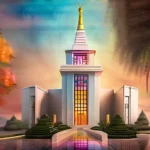
A concrete communal setting is the Temple of ECK campus in Chanhassen, Minnesota. The organization describes public events, tours and contemplation trails there. This illustrates how a teaching centered on inward experience also uses shared places, instruction and gatherings.
Conclusion
Eckankar links an account of eternal individual Soul with practices intended to deepen awareness of Divine Spirit. HU, contemplation, dreams and Soul Travel have distinct roles within that framework, while courses, community events and a spiritual leader give the path an organized form. A useful understanding keeps these relationships together and distinguishes participants’ spiritual interpretations from independently established evidence. That approach explains the movement’s teachings without turning an introduction into either an endorsement or a dismissal.
Reviewed and substantially revised on 2 November 2026. Official sources are used to explain Eckankar’s own teachings and organizational information; spiritual claims are identified as such. See our editorial approach and AI transparency.
Published by Ralf. About our editorial process.