
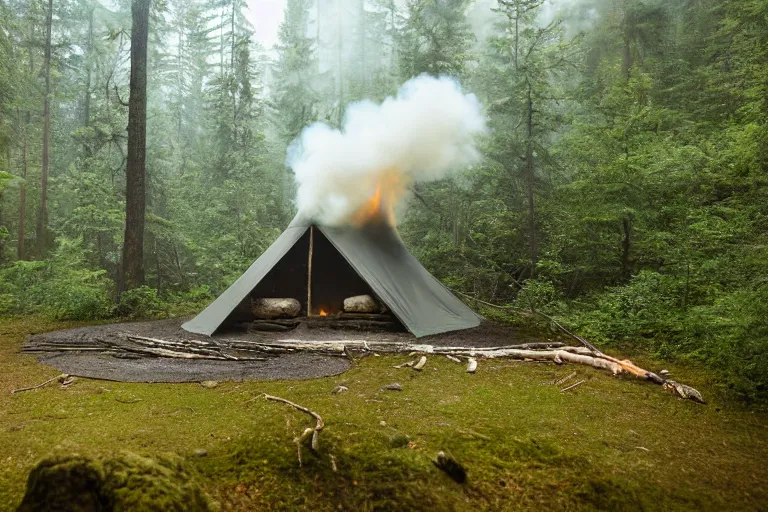

In some Indigenous traditions, a sweat lodge is a place for prayer and purification. The English name covers practices that have their own meanings and responsibilities within particular communities. Two American disputes show a practical dimension of religious freedom. A community in New Jersey sought to use a lodge and other religious structures on land it owned. In Missouri, a man in prison sought a place to undertake purification that he considered necessary for prayer. In each case, access to a place shaped what people could do. Lakota accounts of inípi and ceremonial authority Department of Justice case record on Mahwah Eighth Circuit’s 2008 opinion in Fowler v. Crawford
A place for prayer on Ramapough land
Ramapough Mountain Indians, Inc., an organization serving the Ramapough Munsee Lenape people, describes the Halifax grounds in Mahwah, New Jersey, as a sacred ceremonial place. The grounds were at the center of a dispute about how the Ramapough Lenape Nation could use its property. Its 2018 federal case concerned gathering together for worship and keeping religious structures at the site. A sweat lodge was among the structures described in the case, alongside a prayer circle. Ramapough Mountain Indians’ description of the Halifax grounds Department of Justice case record on Mahwah
The Ramapough alleged that the township had withdrawn zoning permission, limited the number of people who could attend, sought the removal of religious structures and issued fines. The dispute involved gatherings as well as objects. If a community can enter its property but faces penalties for assembling or for keeping structures there, access to the parcel alone leaves important parts of its worship in question. In March 2019 the U.S. Department of Justice filed a statement supporting the Ramapough’s position on federal religious land-use protections. Department of Justice case record on Mahwah
The township and the Ramapough reached a settlement in June 2019. According to the Ramapough’s attorneys, it dismissed the fines and summonses issued up to that point, acknowledged that the Ramapough could continue to gather and worship on the property, and protected existing religious items from removal by the township. The dispute with a neighboring homeowners association continued separately. The Ramapough and that association signed their own settlement in 2022. The documents describe how the parties resolved their disputes about this site. Ramapough attorneys’ report on the Mahwah settlement Signed 2022 agreement with the homeowners association
A different question inside a prison
Clifford Fowler asked the Jefferson City Correctional Center, a Missouri state prison, to provide access to a sweat lodge. He explained that he needed purification in the lodge to use sacred pipes in prayer. An outdoor space for religious gatherings was under consideration, but Fowler testified that a space without the lodge would leave him unable to carry out that part of his religious practice. His testimony describes a specific relationship between two parts of worship. The place for purification mattered because of what he believed he needed to do before praying. Eighth Circuit’s 2008 opinion in Fowler v. Crawford
Prison officials raised safety and supervision concerns. They argued that conducting a ceremony in an enclosed structure presented problems that an open gathering space did not. The court of appeals recorded that officials did not dispute the sincerity of Fowler’s belief. In 2008 it upheld the decision in favor of the prison officials, finding that on the evidence before it the denial met the statutory test in that institution. The court also discussed a different Missouri prison that had previously permitted ceremonies twice a year subject to staff restrictions. It considered that history in light of the record about what Fowler was willing to accept and what officials could supervise at Jefferson City. The ruling addressed the security evidence and alternatives considered in the Missouri case. Eighth Circuit’s 2008 opinion in Fowler v. Crawford
What the federal laws address
The American Indian Religious Freedom Act of 1978 states a federal policy of protecting traditional Indigenous religious exercise, including access to sites, sacred objects and rites. The Religious Land Use and Institutionalized Persons Act of 2000 addresses particular government restrictions. One part concerns land-use regulation. A separate part concerns people confined to institutions. In the prison context it requires the government, when imposing a substantial burden on religious exercise under the law, to justify the restriction by a compelling interest and show that it uses the least restrictive means of serving that interest. American Indian Religious Freedom Act policy text Federal statute on land use and institutionalized persons
Mahwah and Jefferson City illustrate how that distinction plays out. In Mahwah, the public documents describe a community seeking to continue religious use of property it already held. In Jefferson City, a person in custody asked officials to make a place for a practice he could only carry out with their cooperation. The records identify what participants asked to be able to do, which makes it possible to understand the effect of a restriction in each setting. Department of Justice case record on Mahwah Ramapough attorneys’ report on the Mahwah settlement Eighth Circuit’s 2008 opinion in Fowler v. Crawford
Conclusion
The meaning of a sweat lodge belongs to the people and traditions that use it. The Ramapough case shows what it took for one community to continue worship on its land. Fowler’s testimony shows why the offer of a different kind of prayer space did not answer his request for purification. Together, the cases show how decisions about a structure or a parcel of land can affect the exercise of religion. Ramapough Mountain Indians’ description of the Halifax grounds Ramapough attorneys’ report on the Mahwah settlement Eighth Circuit’s 2008 opinion in Fowler v. Crawford
Published by Ralf. About our editorial process.



