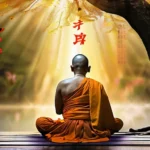
Moksha means liberation, especially freedom from samsara, the cycle of birth, death and rebirth. Many Hindu traditions treat it as the highest spiritual goal. What that freedom involves, however, depends on a tradition’s understanding of the self, God, knowledge and devotion.
It is therefore misleading to define moksha only as a soul “merging with the universe.” Some Hindu philosophies explain liberation through nondual knowledge; others preserve a distinction between the individual and God. These differences affect both the goal and the explanation of how it is reached.
Why is liberation a religious goal?
Belief in samsara places an individual life within a larger cycle. Action and its consequences, described through karma, connect with continued existence. Moksha concerns release from that bondage rather than simply a more comfortable position within it.
In Understanding Hinduism: Basic Questions Answered, D. C. Rao distinguishes moksha from a temporary stay in heaven based on accumulated merit. This Hindu educational account also describes more than one understanding of liberation, including relationship with God and realization while still living.
The distinction helps explain why liberation is more than a reward for a successful worldly life. A favorable rebirth or heavenly experience and freedom from rebirth answer different questions. The underlying beliefs are religious claims about existence, rather than facts established by the definition of the word.
How does moksha relate to the four goals of life?
The framework of the purusharthas places liberation alongside other human aims. Rao’s explanation identifies four:
- Dharma: ethical living, duty and responsibility.
- Artha: material prosperity and the resources needed for life.
- Kama: pleasure, desire and enjoyment.
- Moksha: spiritual liberation.
Artha does not mean selfless action. Confusing the two loses the framework’s recognition of material life. Likewise, listing the four aims does not establish that every Hindu follows an identical timetable or gives each aim the same attention.
The framework allows a more useful question than whether wealth or pleasure is automatically wrong: how do different aims relate to ethical responsibility and spiritual freedom? A discussion of moksha can acknowledge family, work and ordinary human needs without reducing liberation to material success.
Why is karma yoga more than collecting good deeds?
Karma yoga concerns action as spiritual discipline. A central example is Bhagavad Gita 2.47, presented here through Swami Mukundananda’s translation and commentary. The verse directs attention to performing one’s duty without attachment to its fruits and also rejects attachment to inaction.
The combination matters. Detachment from results does not simply mean doing nothing. It concerns the relationship between action, motivation and the demand to possess an outcome. The passage offers a religious account of how to act, rather than a promise that effort will always produce a preferred result.
A concrete institutional example appears in the Ramakrishna Math and Mission’s account of its ideology. It understands service, including feeding people and caring for the sick, as worship and spiritual practice. This is the organization’s explanation of karma yoga, not a claim that every Hindu institution interprets service in exactly the same way.
Reducing moksha to earning enough moral points would miss these concerns with intention, attachment and understanding. Different schools also disagree about the roles of action, knowledge and divine grace.
What does Advaita Vedanta teach?
The Internet Encyclopedia of Philosophy’s account of Advaita Vedanta explains its nondual position: the individual self and Brahman, ultimate reality, are not ultimately separate. Ignorance sustains the experience of separation; liberating knowledge removes that error.
On this account, liberation is not the manufacture of a new relationship between two previously independent realities. It involves understanding what is already true about the self and Brahman. A literal image of one physical object dissolving into another is consequently a poor substitute for the philosophical claim.
Jnana, or knowledge, in this setting is more than accumulating information about religious vocabulary. The relevant understanding concerns the nature of reality and the self. Advaita supplies one influential explanation of moksha, but its conclusions should be identified by name rather than attributed indiscriminately to all Hindus.
How do Ramanuja and Madhva differ?
Ramanuja’s Vishishtadvaita, often translated as qualified nondualism, affirms unity without treating individual persons as unreal. The Internet Encyclopedia of Philosophy describes his defense of a real plurality of persons and his emphasis on devotion to a personal God.
This changes the meaning of liberation: personal distinction and dependence on God remain meaningful. The relationship between divine grace and human effort also became a subject of interpretation within the tradition. The encyclopedia describes differences between later northern and southern schools over the conditions under which grace is given.
Madhva’s Dvaita Vedanta makes the difference between God and individual selves fundamental. Brahman is identified with Vishnu, while selves depend on God rather than becoming identical with him. In this account, divine grace and devotion are central to release from rebirth.
These positions cannot be combined into the statement that every liberated soul loses its individuality. Comparing them reveals a shared concern with bondage and freedom alongside substantial disagreement about what a person is and how that person relates to ultimate reality.
What place do devotion and surrender have?
Bhakti refers to devotion. Bhagavad Gita 18.66 gives an important example: Krishna calls Arjuna to take refuge in him and promises liberation from sin. Mukundananda’s commentary interprets the verse within a devotional relationship with God.
The passage therefore introduces something different from an account based only on independent human achievement. It raises questions about trust, dependence and divine action. The relationship between this teaching, duty and other passages requires interpretation, which helps explain the importance of commentarial traditions.
Bhakti, knowledge, disciplined action and meditation should consequently not be treated as four identical techniques with a guaranteed result. The Ramakrishna tradition, for example, presents a synthesis of yogas, while other schools explain their relationships differently.
Is Patañjali’s eight-limbed yoga the Buddhist Eightfold Path?
No. Patañjali’s ashtanga, or eight-limbed yoga, belongs to a particular philosophical and practical framework. Zoë Slatoff’s account for the St Andrews Encyclopaedia of Theology identifies its components:
- Yama: restraints governing conduct.
- Niyama: personal observances.
- Asana: posture.
- Pranayama: regulation of breath.
- Pratyahara: withdrawal of the senses.
- Dharana: concentration.
- Dhyana: meditation.
- Samadhi: meditative absorption.
The same discussion explains classical Yoga’s goal of kaivalya in relation to the distinction between purusha, the self or consciousness, and prakriti, material nature. This is not simply another name for an Advaita account of identity with Brahman.
The Internet Encyclopedia of Philosophy’s study of Patañjali also places meditation and liberation at the center of the system. Treating yoga here as physical exercise alone leaves out its philosophical purpose. Likewise, defining every state of samadhi as “merging with God” ignores the framework in which a term is being used.
How does moksha compare with Buddhist nirvana?
Both terms occur in discussions of release from suffering and rebirth, but common themes do not make the traditions’ accounts identical. The Buddhist Discourse on Setting the Wheel of Dhamma in Motion presents the Noble Eightfold Path: right view, resolve, speech, action, livelihood, effort, mindfulness and concentration. Its list differs from Patañjali’s eight limbs.
There is also a significant difference in the treatment of self. In the Discourse on the Not-self Characteristic, bodily form, feeling, perception, formations and consciousness are examined as not-self. This does not offer the Advaita account of realizing the identity of atman and Brahman.
A responsible comparison therefore specifies the school, text and question being compared. Calling moksha “transformation” and nirvana “transcendence” does little to explain their actual philosophical differences.
Conclusion
Moksha gives many Hindu traditions a way to ask what freedom beyond repeated birth and death would mean. The answer changes with the understanding of self, Brahman, God, knowledge, devotion and grace. Distinguishing the four human aims, examining concrete teachings about action and comparing Advaita, Vishishtadvaita, Dvaita and classical Yoga provides a fuller explanation than one metaphor of merging or escape. These differences are part of Hindu thought’s depth, and understanding them makes the ideal of liberation more precise.
Reviewed and substantially revised on 2 November 2026. Religious teachings are attributed to particular texts, interpreters and traditions; philosophical differences are retained. See our editorial approach and AI transparency.
Published by Ralf. About our editorial process.