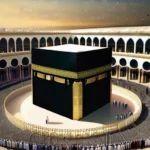
Islam teaches worship of one God, responsibility before God, and a life shaped by prayer, generosity and moral conduct. Its central scripture is the Qur’an, and Muhammad is understood by Muslims as God’s messenger. Understanding these teachings means looking at belief, religious practice and ethical responsibility together.
Islam is the world’s second-largest religion by population. Pew Research Center’s study published in June 2025 estimated around two billion Muslims in 2020, behind Christians. Those are estimates for a specified year, rather than a live population count. The religion’s demographic size does not establish whether its truth claims are correct.
Belief in one God: Tawhid
Tawhid means the oneness of God. Muslims understand Allah as the creator, without partners or equals, and direct worship to God alone. “Allah” is the Arabic word for God; Arabic-speaking Christians also use it. Muhammad is revered as a messenger and example, rather than worshipped as a deity.
The Harvard Pluralism Project’s account of Islamic beliefs explains that divine oneness involves more than counting gods: God is understood as incomparable with created things and as possessing perfect mercy, justice and wisdom. For believers, worship expresses dependence on this creator and gratitude for life.
This is why comparing God with the sun or another physical object can mislead. A comparison may illustrate one point while implying that God is a material part of the universe, which the doctrine does not teach. Tawhid is a theological conviction, rather than a scientific conclusion that everyone must draw from observing order in nature.
Revelation, prophets and the Qur’an
Muslims understand Muhammad’s message as continuing a history of divine guidance associated with earlier prophets, including Abraham, Moses and Jesus. Muslims regard him as the final prophet; his importance rests on his role as a messenger and the example of his life. The Pluralism Project’s introduction to Muhammad places his preaching in seventh-century Arabia and describes its connection between devotion and concern for vulnerable people.
Within Islam, the Qur’an is received as God’s revelation in Arabic. It contains prayers, prophetic narratives, moral instruction, passages concerning judgment and material concerning communal life. Recitation is itself a devotional practice, rather than simply a way of conveying information.
A translation of the Qur’an is generally understood by Muslims as an interpretation of its meaning, with choices that cannot reproduce every feature of the Arabic. This explains why different English versions can phrase the same passage differently. Reading a translation alongside commentary can clarify context and disputed meanings.
The Qur’an should also be distinguished from hadith, reports concerning Muhammad’s words and actions, and from the Sunnah, his authoritative example. These are related sources of guidance, but they are not interchangeable names for the same text.
Faith, practice and spiritual attentiveness
The well-known Hadith of Gabriel, preserved in Sahih Muslim 8a, distinguishes three connected dimensions: Islam, iman and ihsan. Its description of Islam names testimony of faith, prayer, almsgiving, Ramadan fasting and pilgrimage. Its account of iman names belief in God, angels, revealed books, messengers, the Last Day and divine decree.
Ihsan adds a dimension of spiritual attentiveness: worshipping with an awareness that God sees the worshipper. The distinction helps explain why Islamic teaching cannot be reduced either to a list of opinions or to outward rituals. Belief, action and the quality of intention belong together.
These formulations are especially familiar in Sunni teaching. Different Muslim traditions organize their accounts of doctrine differently. A short introductory list offers a starting point for understanding, rather than an exhaustive map of every theological school.
The Five Pillars in everyday life
The Five Pillars give a widely recognized framework for Muslim worship. Each connects a religious commitment with a recurring practice.
- Shahadah: the testimony that there is no god but God and Muhammad is God’s messenger. It expresses the basic commitment to divine oneness and prophethood.
- Salat: the five daily ritual prayers. Their repeated place in the day gives worship an organized rhythm. Ritual prayer also differs from a person’s spontaneous requests or private words to God.
- Zakat: obligatory giving under specified conditions. It makes support for others a religious responsibility, rather than leaving all assistance to occasional generosity.
- Sawm: fasting during Ramadan. The daytime fast includes abstaining from food, drink and sexual activity, with an accompanying emphasis on self-restraint.
- Hajj: pilgrimage to Mecca, required once in a lifetime for those with the physical and financial ability to undertake it.
These practices have conditions and accommodations. The Qur’an’s discussion of Ramadan in 2:185, for example, allows those who are ill or travelling to make up missed fasts on other days. Describing fasting as an unconditional demand on every person would miss an explicit qualification in the text.
Ramadan fasting lasts from dawn to sunset. The Pluralism Project’s account of Ramadan also describes restraint in speech and conduct, the pre-dawn and evening meals, and communal worship. The month therefore involves both bodily discipline and relationships with other people.
Hajj takes place at a specified time in the Islamic calendar and involves a sequence of rites. It is not simply any visit to Mecca, and its obligation should always be explained together with the requirement of ability.
Generosity, justice and keeping promises
Islamic ethics connects worship with responsibilities to other people. Qur’an 2:177 links righteousness with faith, support for relatives and people in need, prayer, keeping promises and perseverance. Qur’an 5:8 warns that hostility towards a group must not displace justice. These passages make moral conduct more demanding than loyalty to one’s own circle.
A useful distinction is between zakat and sadaqah. Islamic Relief explains zakat as obligatory giving subject to rules, while sadaqah is voluntary charity. The latter can support continuing projects such as water systems or schools. Sadaqah is not the Arabic term for truthfulness; confusing charity with honesty obscures two separate ethical ideas.
Intention also matters. Sahih al-Bukhari 1 connects the reward for an action with the intention behind it. This invites a distinction between performing a helpful act for recognition and performing it out of sincere commitment. It does not make the needs of the person receiving help irrelevant.
Shariah, interpretation and Muslim diversity
Shariah concerns divine guidance for life, including worship and ethical and legal responsibilities. Fiqh is the work of understanding and articulating rulings through scholarly interpretation. Egypt’s Dar al-Ifta explicitly distinguishes this human activity from the divine guidance it seeks to understand, and acknowledges that jurists can be mistaken.
That distinction explains how scholars can appeal to shared sources yet disagree over an application. Legal reasoning involves methods, language, interpretation and attention to circumstances. Consensus is one concept within this tradition; it is not a synonym for the whole interpretive process or an automatic answer to every new question.
The Amman Message’s three points recognize several Sunni, Shi‘i and other legal schools and emphasize qualifications for issuing religious rulings. As an institutional statement advocating recognition across traditions, it provides a concrete example of Muslims affirming shared commitments while acknowledging legitimate differences.
The Sunni–Shi‘i distinction also involves historical disagreements over leadership after Muhammad and the authority of his family. The Pluralism Project’s historical overview explains why questions of succession and religious authority remain significant. Muslim diversity cannot be captured simply by a contrast between people who follow rules and people who value spirituality.
Judgment, mercy and moral responsibility
Belief in the Last Day places human life within an account of ultimate responsibility. It does not mean that a person can purchase salvation by accumulating enough visible achievements. In Sahih al-Bukhari 6463, Muhammad is reported as teaching that salvation depends on God’s mercy, while encouraging sincere, moderate and sustained good deeds.
This relationship between responsibility and mercy matters for understanding Islamic ethics. Conduct is consequential, but a person’s outward record does not authorize an observer to pronounce God’s final judgment on them. The teaching calls believers to act seriously without treating themselves as masters of divine judgment.
Conclusion
The key teachings of Islam connect belief in one God with revelation, worship, generosity and accountability. The Five Pillars make these commitments part of daily and communal life, while ethical teachings extend responsibility to promises, fair dealing and care for people in need.
These teachings relate ritual practice to moral conduct, human interpretation to divine guidance, and responsibility to mercy. Shared foundations coexist with real differences among Muslim traditions, so an accurate introduction explains both the common commitments and the limits of any single summary.
Published by Ralf. About our editorial process.