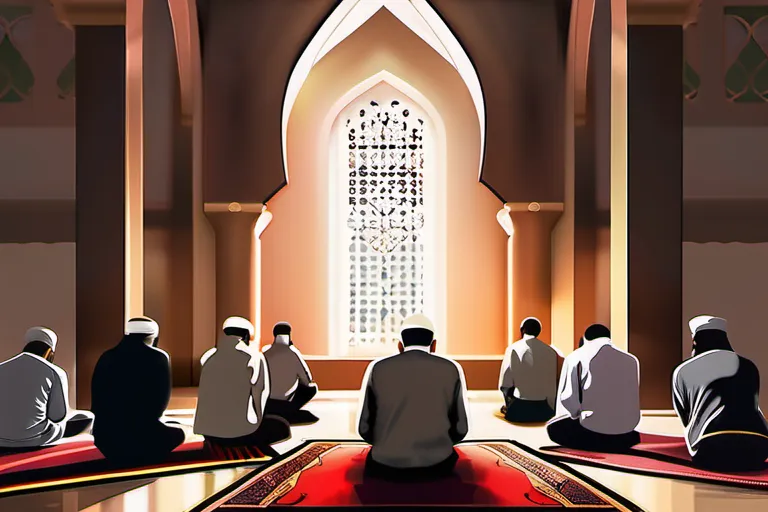
SABA Islamic Center in San José, California, is associated with the Shia Association of the Bay Area. Its public mission statement connects spiritual devotion, education, community participation, and personal development with the Qurʾān and the Ahl al-Bayt, the Prophet Muhammad’s household.
Its religious commitments take practical form through prayer, study, youth activities, family services, and outreach. The center brings these activities together in a multilingual Bay Area community, linking religious learning with the relationships and responsibilities of everyday life.
The Qurʾān and Ahl al-Bayt as Religious Reference Points
SABA’s About page opens with a report connecting the Qurʾān and the Prophet’s household, commonly known as the tradition of the two weighty or precious things. It places those two reference points together in explaining the center’s mission.
This provides important context for its Shia identity. A reader should ask how Qurʾānic teaching, the example of the Prophet, and the heritage of the Ahl al-Bayt inform interpretation and practice. A description limited to generic moral encouragement would miss this particular understanding of religious guidance.
It also helps explain why commemorations, devotional gatherings, and teaching about the Prophet’s household occupy a visible place in the center’s activities. These observances form part of how a community remembers its religious inheritance and passes it to another generation.
Worship Combines Prayer, Teaching, and Community
The center’s Friday prayer page lists Qurʾān recitation, the call to prayer, a sermon, congregational prayer, and a meal. The sequence brings together listening, instruction, worship, and social gathering.
Each part has a different role. Recitation gives attention to scripture; a sermon offers teaching; communal prayer makes worship a shared action; a meal provides an opportunity for relationships beyond the formal observance. Looking at the sequence explains more than describing every part simply as a feeling of unity.
SABA’s description of its religious activities also includes Ramadan and Muharram programs and commemorations associated with the fourteen Maʿṣūmīn, the figures revered as infallible in its Shia heritage. Its calendar gives the religious inheritance of the Ahl al-Bayt a recurring place in communal worship and learning.
For an actual visit, the current program calendar is the appropriate place to check the event, language, audience, and time. The meaning of an observance and its practical arrangements are related but separate questions.
Education Includes Belief, Practice, and Character
The SABA Sunday School’s own introduction identifies Islamic creed, Qurʾān, Islamic history, morals, and character-building among its subjects. Its mission connects learning with love for God and the Ahl al-Bayt, Islamic identity, and a relationship with scripture.
These subjects address different kinds of learning. Creed concerns what is believed. Jurisprudence, or fiqh, concerns religious duties and how they are understood. Akhlāq concerns character and conduct. History gives a setting for people and events, while learning to recite the Qurʾān develops another set of skills.
Imagine a lesson about prayer. A student may need to learn the words, understand the actions, ask about the obligation, and consider the attitude with which the prayer is performed. Those tasks complement one another. The example illustrates how the fields can connect; it is not a report of a particular classroom lesson.
This approach also gives parents useful questions to ask about a course: What knowledge will children acquire? What practice will they learn? How will they understand the relationship between religious instruction and their treatment of others?
Published Resources Support Beginners
SABA’s resources page lists introductions to Islam and Ramadan and a beginner’s guide to ṣalāh. Its description of the prayer guide mentions step-by-step instruction, transliterated Arabic, and translations.
The combination matters for a learner who does not yet read Arabic fluently. Transliteration can help with pronunciation, translation can explain meaning, and an account of the prayer’s sequence can connect words with actions. Each supports a different part of learning; none makes further study or guidance unnecessary.
A learner can bring the guide to a class or consultation and ask focused questions about pronunciation, meaning, or the sequence of actions. Connecting written material with instruction makes it easier to identify what is already understood and what needs further explanation.
Sunday School and Full-Time Education Have Different Roles
The center’s education page distinguishes its Sunday-school connection from RISE Academy, a faith-based school operating within the RISE Education System. It describes academic education alongside religious learning and identifies RISE as a legally separate nonprofit organization based at the SABA campus.
This distinction is useful for families considering their needs. A supplementary religious program and a full-time school serve different purposes, even when they share a location and a religious environment. Their curriculum, admissions, age groups, and practical requirements should be examined through the relevant provider.
The same page describes children’s Islamic literature and curriculum resources associated with Kisa Kids. Together, the examples show education taking several forms: a scheduled class, a broader school program, and materials used by families or teachers.
Youth Participation and Community Responsibility
The SABA Youth Group’s published description connects religious learning with an Islamic social environment, opportunities to develop leadership, and a forum for young people’s concerns. It explicitly places its religious aims within the teaching of the Ahl al-Bayt.
The page’s outreach proposal identifies possible volunteer activities such as serving meals, visiting seniors, planting trees, and collecting supplies. It presents these as opportunities through which the group aims to encourage community participation.
The underlying educational connection is clear: knowledge is intended to influence participation and responsibility. A young person considering a service activity can ask who needs help, what practical preparation is required, and how to contribute reliably. Such questions turn a broad ideal of service into attention to another person’s actual circumstances.
Giving and Support for Families
SABA’s About page lists collection and distribution of fiṭrah, zakāh, khums, and donations for families needing financial assistance. It identifies several categories of religious giving, rather than one interchangeable label for every payment.
That distinction matters when understanding the center’s charitable work. A general donation and a contribution made under a particular religious obligation can raise different questions about intention and permitted use. Anyone seeking guidance about an obligation or a designated contribution can use the center’s published scholar-consultation and contact channels.
The member-services page also describes marriage-related services, religious counseling, and Islamic burial arrangements. These activities connect religious learning with major transitions in family and communal life. They show why a center’s role can extend beyond scheduled worship.
A Wider Educational and Support Network
The SABA Global page describes a network of related initiatives. Among its examples are the Al-Kisa Foundation’s educational work, the Ṣirāṭ Project’s stated support for incarcerated Muslims through materials and other assistance, and ABSA’s professional and spiritual-development opportunities for Shia young people.
The page also identifies resources intended for newer Muslims and for families. Introductory explanations, children’s materials, online instruction, and support networks provide different routes into learning. Their suitability depends on the learner’s questions, language, and circumstances.
For understanding SABA’s priorities, the network illustrates a recurring connection between learning and access. The intended audience includes people whose circumstances differ substantially: children, students, newcomers, families, and people in prison. A single local class cannot meet all of those needs in the same way.
Languages, Women’s Programs, and Dialogue
SABA’s self-description identifies programming in English, Urdu, Farsi, and Arabic. It also lists women’s programs, including collaboration with other Islamic centers. These are concrete features of its published account of community participation.
The same page describes cooperation with other Muslim organizations and neighboring churches and faith communities. Its stated approach therefore combines a particular religious identity with interaction beyond that community.
Multilingual teaching can make religious learning accessible to people with different linguistic backgrounds. Age-focused and women’s programs create particular settings for participation. Dialogue with another faith community addresses a different task: learning about neighbors and working through shared concerns while retaining a distinct religious identity.
Conclusion
SABA Islamic Center presents a Shia community life grounded in the Qurʾān and the Ahl al-Bayt. Its published materials connect that foundation with congregational worship, religious education, youth participation, support for families, and a wider network of educational initiatives.
Its programs illustrate how a local religious institution can support learning at several stages of life and connect worship with communal responsibility. Readers seeking to participate can begin with the relevant prayer, education, youth, or family-service information and use the center’s current calendar and contacts for practical arrangements.
Published by Ralf. About our editorial process.