

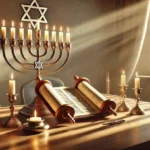
On a Shavuot poster from 1976, an open Torah scroll is surrounded by flowers. Written on the scroll is a verse about the first fruits of the wheat harvest. The poster, held by the National Library of Israel, puts two meanings of the Jewish festival in a single image. Shavuot marks a point in the agricultural calendar and celebrates the giving of Torah at Sinai. The harvest provisions, the story of Ruth and the practice of studying at night show how these meanings are expressed. See the National Library of Israel’s description of the 1976 poster.
Why Shavuot is called the Festival of Weeks
Shavuot means weeks in Hebrew. Leviticus 23 counts seven complete weeks from the presentation of a sheaf and calls for an offering from the new grain on the fiftieth day. In Jewish practice the count, known as the Counting of the Omer, begins during Passover. Shavuot begins on the sixth of Sivan in the Hebrew calendar. Deuteronomy lists the Festival of Weeks with the Feast of Unleavened Bread and the Festival of Booths as occasions for appearing before God with gifts. These passages give the festival a place both in the agricultural year and among the biblical pilgrim festivals. Read Leviticus 23 on the count and the offering. Read Deuteronomy 16 on the pilgrimage festivals.
What a basket of first fruits expresses
Exodus 34 associates the Festival of Weeks with the first fruits of the wheat harvest. Deuteronomy 26 describes a related offering in more detail. The worshipper brings the first produce in a basket, and a priest receives it and places it before the altar. The words spoken over the offering recall hardship in Egypt, deliverance and the gift of land. In his commentary on Deuteronomy, Rashi identifies Shavuot as the beginning of the season when the declaration accompanying the first fruits could be recited. The basket links gratitude for a particular crop with a story about how the people came to the land. Read Exodus 34:22. Read Deuteronomy 26 and Rashi’s commentary.
Why Ruth is read on Shavuot
In the Book of Ruth, a Moabite widow goes with her mother-in-law Naomi to Bethlehem. Ruth gathers grain left by the harvesters in Boaz’s fields and takes food back to Naomi. The narrative follows her through the barley and wheat harvests. The setting makes the book especially fitting for a harvest festival. Chabad also describes a traditional reading that connects Ruth’s commitment to Naomi and her people with the acceptance of Torah. The setting for the reading varies. Chabad’s own custom includes Ruth in its night study, while some communities read the book publicly in synagogue. Read the Book of Ruth. Read the discussion of the reading and its variations.
How night study recalls Sinai
Exodus 19 describes the Israelites preparing for God’s appearance at Sinai after leaving Egypt. Shavuot celebrates the giving of Torah by returning to that story and making time to study. A custom known as Tikkun Leil Shavuot sets aside the festival night for learning. The National Library of Israel documents a poster printed by Kibbutz Yifat in 1972 announcing such a gathering. In the library’s materials, the poster sits alongside a medieval reading of Exodus 19 in which Ibn Ezra suggests that the people may have remained awake in anticipation of hearing God. The biblical narrative and its later interpretation give the custom a context, and the poster shows a community making an occasion for it. Read the preparations at Sinai in Exodus 19. See the library’s materials on the 1972 poster and Ibn Ezra.
Flowers and dairy at the festival
Some households and synagogues decorate with flowers or greenery, a custom the National Library sees reflected in the 1976 poster. Festive meals may also include dairy dishes. One explanation given by Chabad compares Torah to milk and honey. The Mishnah Berurah gives a different interpretation, linking the dairy meal to the time it would have taken the Israelites to prepare meat under the laws they had just received. Both explanations give an ordinary food a place in remembering Sinai. Read Chabad’s account of the festival customs.
Conclusion
The count toward Shavuot ties the festival to the rhythm of the harvest. The basket of first fruits and the story of Ruth give that season a human setting, with food received, shared and brought in gratitude. Study on the festival night makes the remembrance of Sinai an activity in which people can take part. The wheat-harvest verse pictured inside the Torah scroll on the 1976 poster brings these strands together.
Published by Ralf. About our editorial process.



